What does Ilyich's light bulb mean?
The expression "Ilyich's light bulb" has been in colloquial use for a century, along with "Newton's apple" or "Maslow's pyramid". But the real reasons for the appearance of such phraseological units are unknown to many. The article will tell you about the connection between a simple incandescent lamp and the leader of the revolution, where did the name come from, and who is the real inventor of this luminous device.
What is the light bulb "Ilyich"
In fact, this is nothing more than a standard incandescent lamp without a plafond. It is screwed into a hanging cartridge attached to the ceiling with a wire. This method of lighting is still used in many apartments, private houses, cottages. Of course, the brightness and range of illumination of such a device is rather meager, so the “Lenin light bulb” needs to be strengthened with additional lamps.
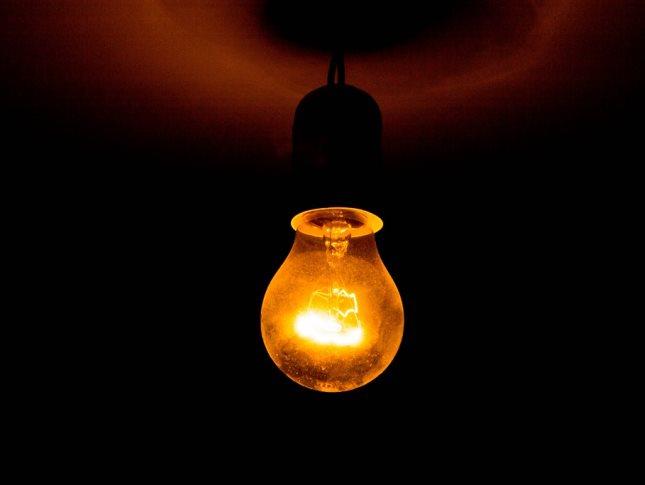
Now the concept of "Ilyich's light bulb" has already become a phraseological unit and has rather a comic-ironic connotation. One of the meanings is backlighting or other technical work done hastily, in a hurry, from what was at hand.. That is, there is no great certainty that such a craft will last a long time.
Where did this expression come from
100 years ago, the expression "Ilyich's lamp" had a completely different meaning. At the turn of the second and third decades of the last century in post-revolutionary Russia, and, in particular, in the rural outback, the electrification program for the whole country, developed by the state commission GOELRO, began to be implemented.

A historic event happened on November 14, 1920, when the father of the revolution, together with his wife Nadezhda Krupskaya, went to the village of Kashino near Moscow. He went, of course, not for a country walk.
In this settlement, they were preparing to open the first rural power plant in the vastness of the country.
The role of the cables was played by the old telegraph wires, which had long been idle, the wiring and the station were created by the inhabitants of the village of Kashino themselves, inspired by the heartfelt speeches of Ilyich's speeches. They also acted as the main "investors" in this big deal, although Lenin himself allocated a tidy sum for the benefit of technical progress. But the current generator was designed in Moscow. After the launch of the station, there was a solemn meeting and a visit by the leader to the houses of peasants, acquaintance with the local way of life.

What happened in Kashin on a late autumn day 1920became a real turning point for Russia. Now the lighting could be seen not only by high-ranking officials at congresses and solemn events. An ordinary incandescent light bulb opened a completely different world for a simple peasant, showed that the usual way of life becomes much easier with the help of artificial light.A small miracle of technology hanging on the ceiling opened a “portal” into a new historical era of the country.
Interesting. The famous saying “A pear is hanging - you can’t eat it” is a characteristic trend of those years.
It is believed that it was the electrification of the provincial hinterland that gave rise to the active introduction of electricity in large cities. This is the explanation of the essence of the phenomenon of "Lenin's light bulb".
Who is the real inventor
By and large, "Ilyich's lamp" - one of the most typical clichés of Soviet propaganda. Any more or less sane person understands that the leader of the revolution has nothing to do with the invention of the luminous "pear". Prototypes of incandescent lamps were created back in the first half of the 19th century by European inventors and innovators Delarue, Jobar, Starr, Goebel. However, the real breakthrough was made by the Russian inventor Alexander Lodygin. In the summer of 1874, he patented a light bulb in which the role of the filament was played by a carbon fiber rod inside a sealed vacuum vessel. Instantly this invention was appreciated and received recognition in the progressive countries of Western Europe, led by Germany and Great Britain.
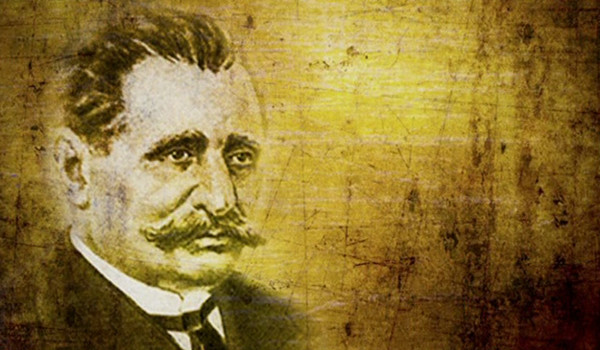
In comparison with the previous versions of the lamps, Lodyginskaya had a longer "life" and a high degree of tightness. Due to this, it became possible to use it in any conditions, and not only in laboratories.
Recommended reading: The history of the invention of the incandescent lamp
It was Lodygin's masterpiece that became the basis, the prototype from which all subsequent modifications of lighting devices originated.Only 5 years after that, the American Thomas Edison came up with and patented an improved version of what was implemented by Lodygin. Alexander Nikolayevich himself left Tsarist Russia at the beginning of the 20th century and went to the USA. There he experimented with tungsten and other light gray metals, invented and patented the tungsten filament for lamps, and then sold the rights to the General Electric Corporation. In 1923 in New York, the 75-year-old innovator left this world.