Artificial lighting in sales areas
Properly selected lighting for the trading floor can influence buyers and focus their attention on the right products and areas. In addition, light makes it easier to stand out from the competition and create an atmosphere that people will like, so that they want to return to a particular store.
Principles of lighting the trading floor
This lighting option is different from others and requires a special approach. First you need to understand the principles that are used when planning light:
- To ensure excellent visibility and attract attention, the lighting of the trading floor is usually done at the level from 1000 to 1500 Lx. Although in some cases it can be twice as low.
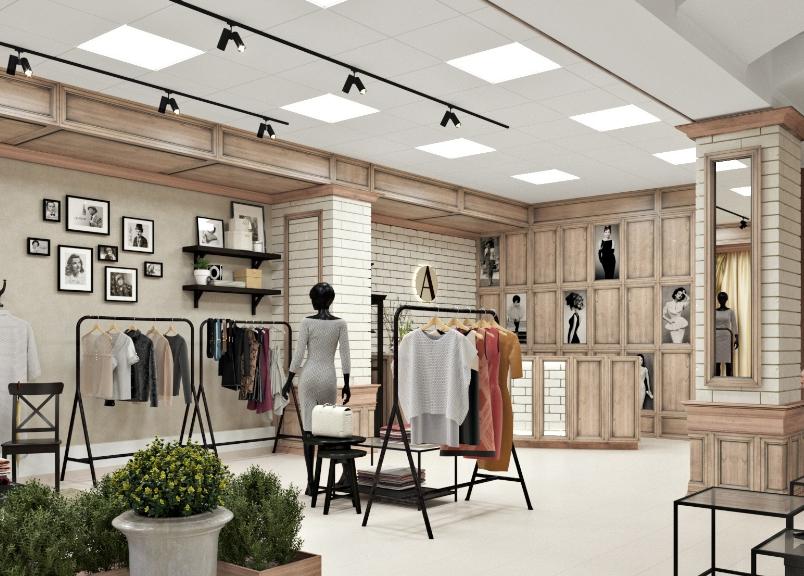
- In high-end retail outlets, general lighting may be subdued, with bright lights used to highlight individual products.
- Due to light accents, you can direct the buyer to goods that are sold on special conditions or highlight new collections.
- It is necessary to take into account the specifics of the goods presented in the store. So, if furs are sold, then the minimum level of illumination begins from 1000 lux, this also applies to carpets, as well as other products that strongly absorb light.
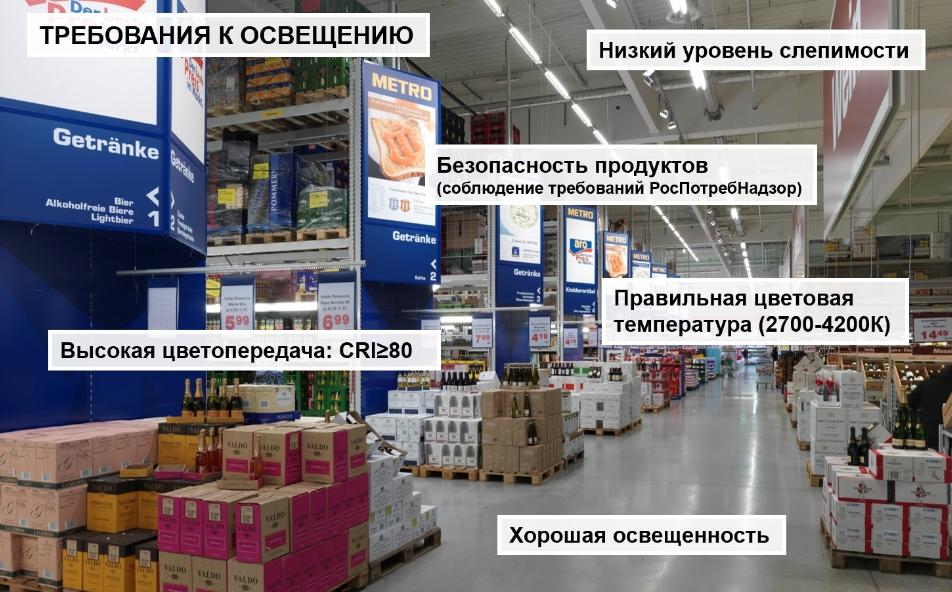
If there are a lot of goods, the lighting standards also need to be increased, since the walls are closed and do not reflect light.
Types of lighting
All used options can be divided into 3 main groups depending on the features of the equipment and the purpose of the application:
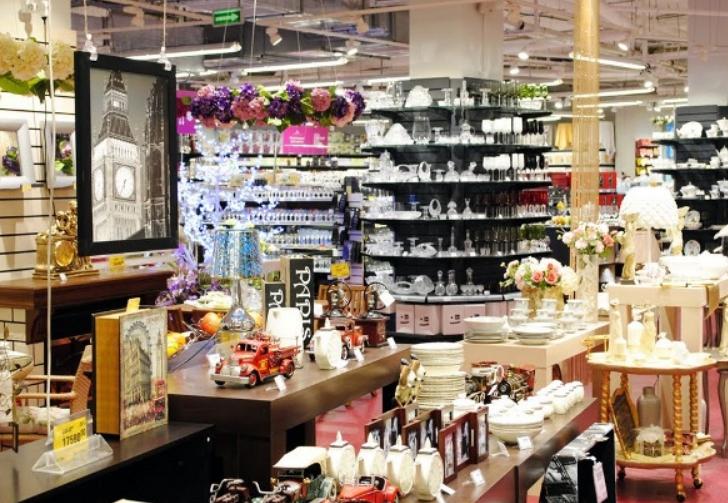
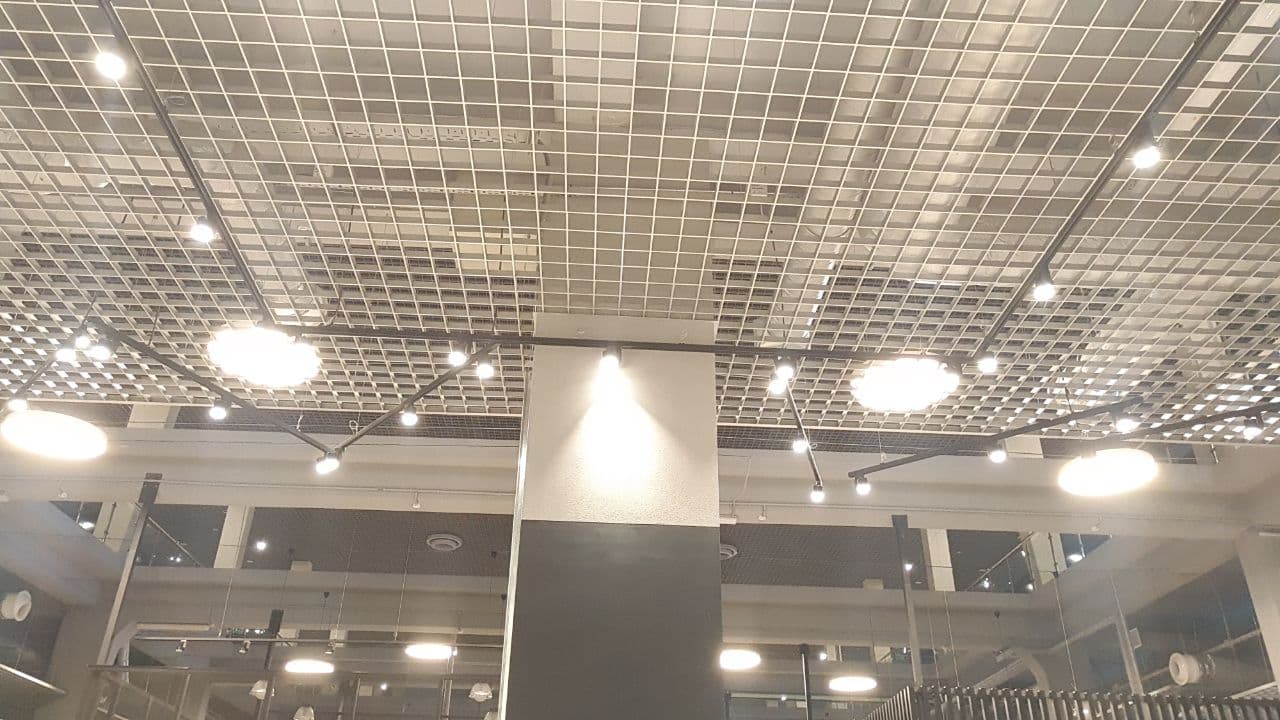
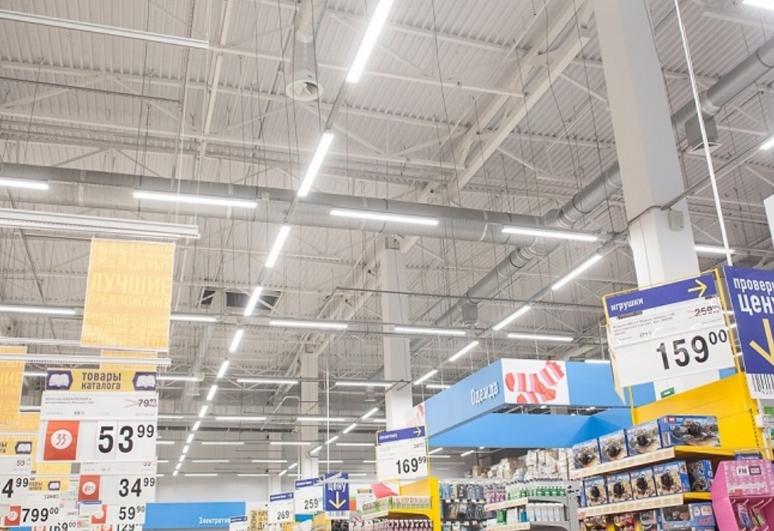
- General lighting sets the direction of the design and provides excellent visibility throughout the sales area. More often used diffused light from ceiling lamps or modular fixtures, the number and location of which is determined individually.
![General lighting]() General lighting should provide perfect visibility.
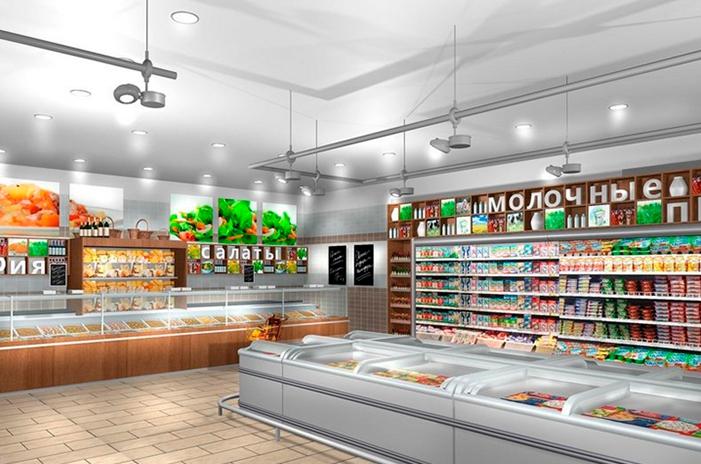
General lighting should provide perfect visibility. - accenting lighting is necessary to highlight individual racks or goods. It is used to attract the attention of buyers to certain types of products or to create unique zones when moving around the trading floor.
- Decorative lighting necessary to highlight promotional products, decorate individual elements of the trading floor. It is also important in the development of corporate identity, with its help showcases and signs are highlighted in order to attract attention.
![the mall is much more attractive]() Due to the light, you can make the trading floor much more attractive.
Due to the light, you can make the trading floor much more attractive.
Norms of lighting of the trading floor according to SNiP
The main rules are:
- For zones where cash desks are located, you need from 300 to 500 lux.
- Shelves, racks, as well as racks behind counters in non-self-service stores are illuminated with an intensity of at least 300 Lux.
- All objects in the trading floors of supermarkets and hypermarkets - from 500 lux.
- Lounges in self-service outlets – 400 Lx and more.
- Showcases and outdoor advertising from 300 lux.
- Zones where new items are presented - from 500 to 1500 and more.
- Fitting rooms and space in front of mirrors - at least 300 lux.
All presented indicators are the minimum illumination standards established by law. Actual values are usually higher, and most often they exceed the standards by several times.
How to correctly calculate the required lighting
First, the strength of the luminous flux, which will be required for lighting, is always determined. For this, the minimum standard illumination and the area of the zone that needs to be illuminated are taken. After multiplication, the minimum allowable indicator will be obtained, which most often increases due to the characteristics of the room, the dark color of the walls and other factors.
Next, you need to determine the type of fixtures that will be used and calculate light flowA that originates from a single element. It is not difficult to do this, most often all the indicators are on the packaging or in the accompanying documentation.
Take into account the illuminance safety factor, which can range from 1.2 to 1.5 depending on the height of the equipment and the reflectance of the walls, ceiling and floor.Remember that lighting can be uneven, and the minimum allowable standards should be checked exactly in places with the worst light in order to achieve a good effect.
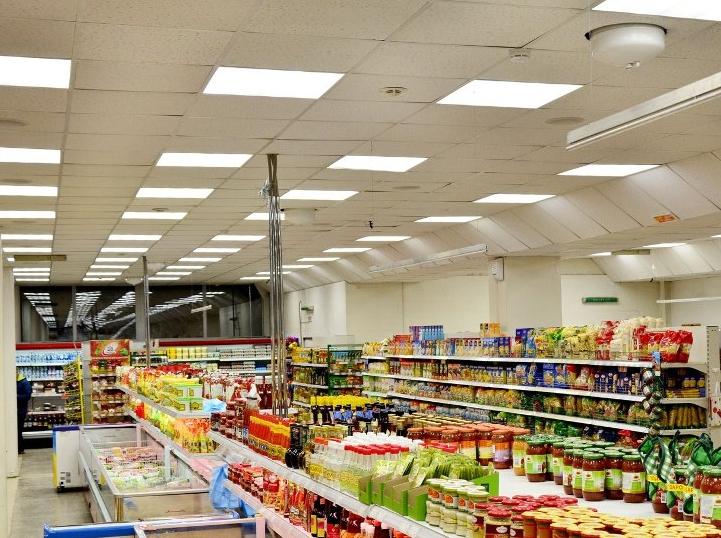
After the calculations, the number of rows of fixtures is determined, it all depends on the width of the trading floor. Better always plan lighting with a marginso that with small miscalculations they do not affect the result. It is worthwhile to involve specialists in the calculations or just look at the lighting features of rooms of a similar size and shape.
By the way! It is important to immediately determine the distance between the lamps in a row in order to accurately calculate their number. To do this, it is worth considering the total power of the lamps in each and the angle of light propagation, usually it is about 120 degrees. The light fluxes of neighboring elements must intersect for uniform illumination.
- If a exhibited light goods, then the illumination can be reduced by one step. For dark products, it is better to do the opposite.
- To focus on individual products, you can highlight them with brighter lighting. At the same time, the area of accented areas should not exceed 20% of the total size of the showcase.
- When lighting, you need to remember that the light should not create discomfort for the eyesight of pedestrians and passing drivers.
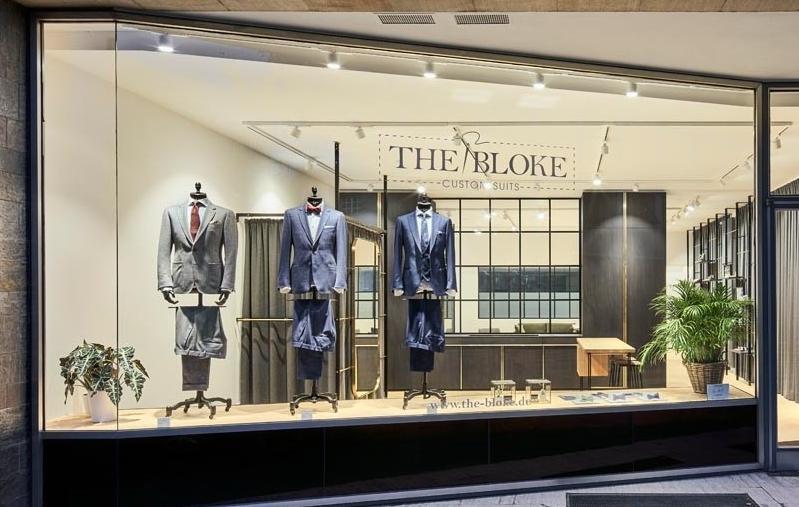
The window should attract attention, but not create discomfort for the eyes.Depending on the category of goods, it is necessary to select the optimal color temperature for artificial showcase lighting:
- For fish and fish products - from 4000 to 6500 K.
- For fruits and vegetables, gastronomy, confectionery, dairy and meat products from 2800 to 3500 K.
- For haberdashery and perfumes, books, shoes, hats, fabrics, furs and toys - from 2800 to 5000 K.
- For bakery products, dishes, electrical and stationery, as well as for groceries - 2800-3200 K.
Well-chosen shop window lighting shows products in the most favorable light.
Trade lighting mistakes
To organize everything correctly and avoid mistakes, you need to pay attention to such points:
- Use modern LED lamps that save energy. Compared to fluorescent, you can reduce energy consumption by half.
- Think over the location of general lighting so that it covers the entire trading floor and provides good visibility of all shelves. Avoid directional light that can blind customers.
- Select the correct color temperature for different product groups. Cold light is suitable for warm shades and vice versa, due to this, you can increase the attractiveness of shop windows and shelves.
- Properly combine general and directional light to highlight exactly those areas that matter most.
The more goods on the trading floor, the higher the requirements for lighting.It is necessary to select lighting for trading floors taking into account a number of factors, so it is better to understand the topic in advance in order to organize everything correctly. It is important to comply with the established standards and think over the backlighting of shop windows in advance.
At the end of the video: What should be the light for the store. How to avoid major mistakes.