Description and features of theatrical stage lighting
Stage lighting has a number of features. To do it right, you should first study the topic and understand what principles are used to organize stage lighting.
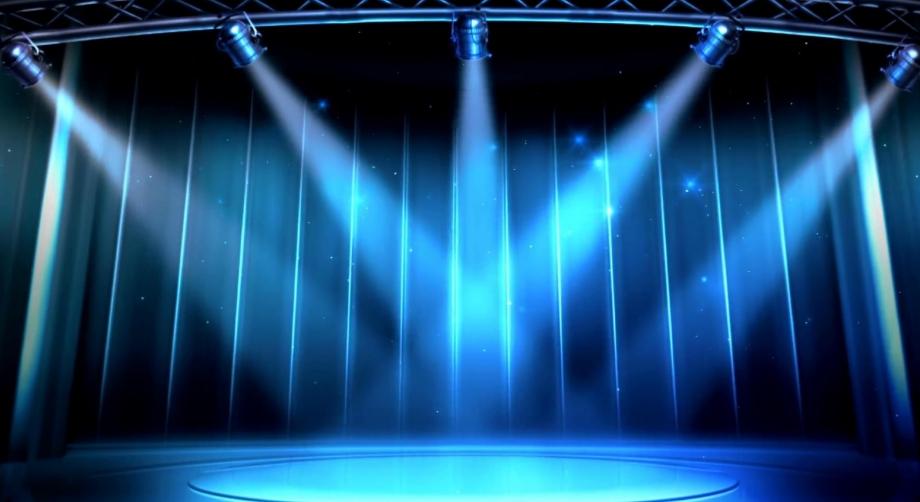
Key Features
Theatrical lighting has its own differences and is organized taking into account several basic principles that are always unchanged:
- Light is not a separate element, it is part of the overall design complex and is needed to create an image of what is happening. Due to the lighting, good visibility is provided and attention is focused on certain parts of the stage or performers.
- The lighting system cannot be static, it consists of many elements that need to be turned on or off at a certain moment in order to play with light and shadow.It is especially difficult to ensure the dynamics of the action, in this case, the perception of what is happening depends on the change in lighting.
- Concerts, performances and other events are held on the stage of the house of culture or any other institution. And on each of them you need to clearly cover what is happening, so you need to think through everything in advance and adjust the effects during rehearsals.
- Light sources have different functions and cannot always be used. Before choosing the type of equipment, you need to think about what compositions will be created. It is better to make a system that is easily transformed.
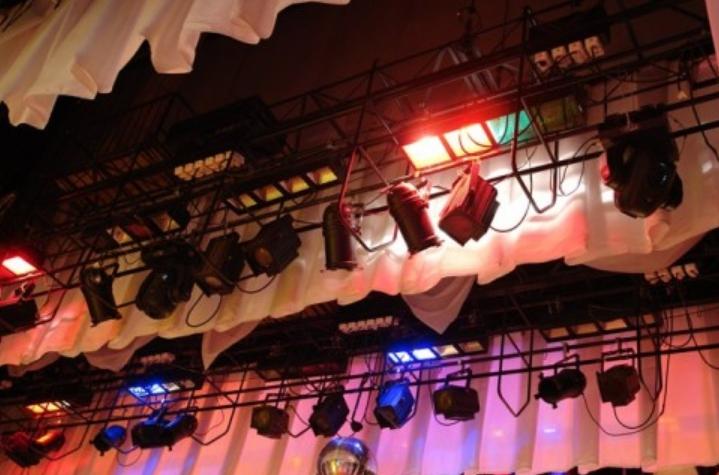
It doesn't matter where the lighting is done - in the theater, on the school stage, etc., the dynamics of the action must be taken into account in order to ensure the desired effect. It is desirable that it be possible to make changes, since static light does not give the desired effect.
Types of lighting
Depending on the amount of equipment used, there are two main varieties. Each has features that need to be sorted out in advance.
Single light source
The option is difficult to implement, since it is required to install spotlight at a considerable distance. The larger the illuminated area, the further away the equipment needs to be placed, which is not always possible in small halls.
With this technique, you can select one speaker or soloist. The light is almost impossible to adjust, it is impossible to place color accents. It is tuned to a specific point, most often in the middle, a mark is often put on the floor so that a person understands where he needs to be located for the best effect.
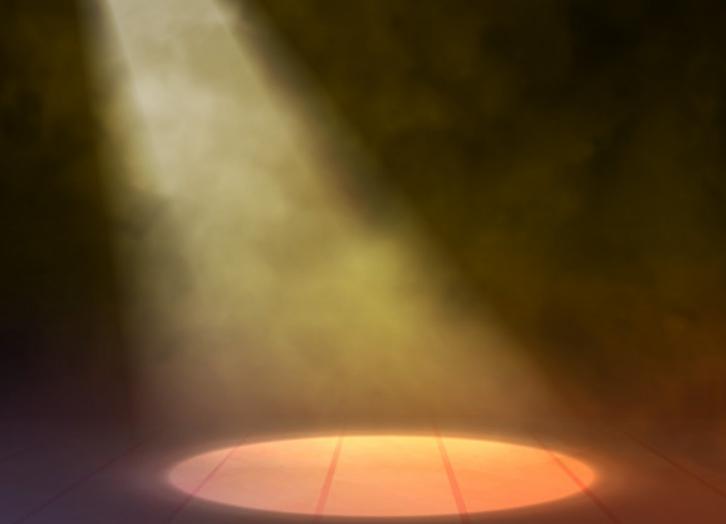
If a person moves deep into the scene, then the illumination will drop sharply.
Here you also need to remember a simple rule - the smaller the light source, the sharper the border of light and shadow on the stage. And large spotlights, on the contrary, highlight a large area, but at the same time, the difference in illumination is not so obvious.
Using Multiple Lights
To make a versatile and fast-changing light on the stage, it is better to use different options:
- Many pieces of equipment can be involved: front, back, bottom, top, sides, etc.
- Use any type of lighting. It all depends on the specific conditions and goals.
- Several options on each side, so that by composing different modes you can achieve any effect.
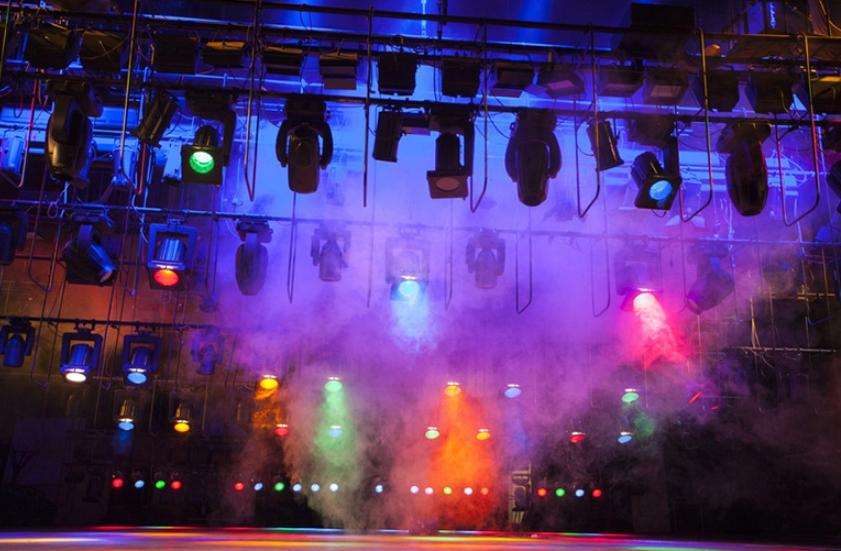
By the way! If the stage is used for different purposes, it is better to give preference to moving equipment or lights that can be adjusted as you like.
How to choose the angle of incidence of light
The perception of what is happening on the stage depends on this aspect, so you need to choose the appropriate angles of incidence of light. There are several options that are easy to understand:
- Horizontal or flat - shines directly and coincides with how the audience sees the scene from the hall. This background lighting, which provides good visibility, is most often used as an auxiliary.
- Back lighting comes from the back of the stage, can be either hidden or open. It is used to add drama or highlight the silhouettes of those on stage.
- side light most often located on the sides, often hidden behind the scenes.Due to it, you can focus on what is happening on the stage.
- Top lighting can be located both on the ceiling and on a special beam that rises or falls. It creates a feeling of monumentality, but can also give a pressing effect.
- ramp light comes from a special niche, which can be located both almost under the feet of those who are on the stage, and a little ahead of them. Most suitable for concerts and variety performances, as it looks artificial.
![metal carcass.]() Often a metal frame is installed for lighting installation.
Often a metal frame is installed for lighting installation. - Upper front installed in a niche or on a beam, which is located under the ceiling in front of the stage. One of the best solutions to create a natural atmosphere and immerse the audience in what is happening on stage.
- Diagonal backlight goes at an angle and allows you to create interesting shadows or emphasize certain angles to give originality to what is happening.
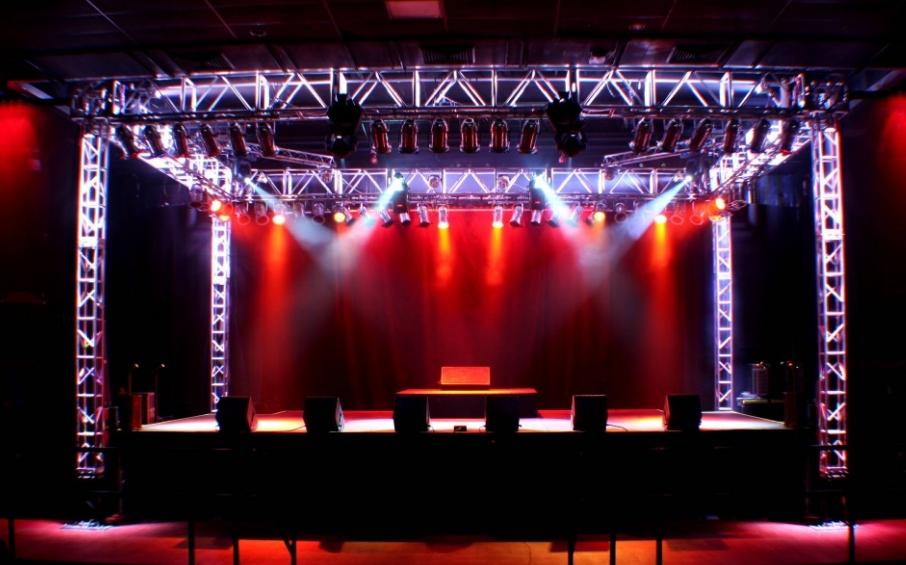
The effect of each option is different in different scenes.
How to combine different angles of stage lighting
Stage lighting is a complex system in which it is impossible to achieve a good effect without combining different lighting angles. In this case, you need to remember a number of features:
- To make a figure or object more contrast and visually closer to the viewer, you need to highlight it with the help of backlighting. In this case, you can dim the main light sources for the greatest expressiveness. And using only backlighting will provide a dramatic effect at the right time.
- The combination of different angles when lighting highlights a certain object. Due to the predominance of the brightness of a particular lamp, you can change the perception of the audience, here you need to select the optimal combination in advance, understand how this or that option works.
- In order to focus attention on one object and keep attention on it, it is necessary that only one light source prevails in lighting. The rest have an auxiliary function, and reducing their intensity gives the best effect.
![several lighting options can be used at once.]() At one moment, several lighting options can be used at once.
At one moment, several lighting options can be used at once. - No need to combine all possible options at the same time. It is best to choose 1-2 suitable lighting angles and make them a priority, the rest can serve as a background. And if you leave only a small part of the lighting, you can focus at the right time to achieve the best effect.
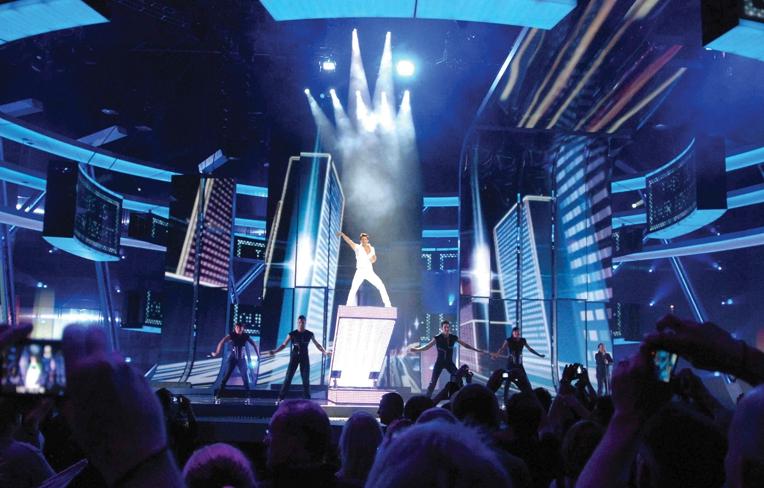
For theatrical productions, it is often necessary to imitate real light sources on the stage - lanterns, lamps, etc. In this case, solutions are selected that will not blind the audience, but at the same time provide realism.
What to consider when creating stage lighting schemes
Since the system depends on the size and shape of the stage, the characteristics of the hall and what will happen, it makes no sense to give specific recommendations. It is best to follow the general principles for creating the ideal circuit:
- It is better to give preference to dynamic lighting, the audience quickly gets tired of static lighting and attention is inevitably scattered.
- To create a dramatic effect and attract attention, you can dim the lights for a short period, but this should not be abused.
- Flood lighting provides good visibility of what is happening on the stage. With the help of directional light, you can focus on the right objects, and dynamic lighting will provide a variety of effects.
- It is best to combine different equipment options so that you can play with light and thereby emphasize what is happening on stage.
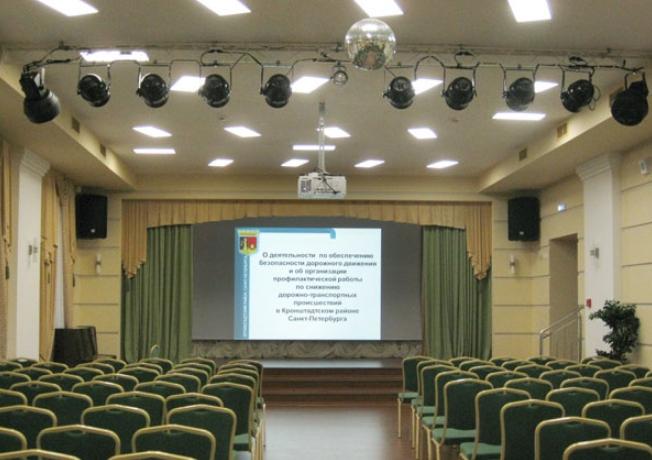
It is better to use a control system that will execute the script according to a given algorithm without human intervention.
In conclusion, we recommend a video on the topic:
Creating a reliable stage lighting system is not easy, but if you understand all the nuances, you can achieve a good result. It is important to combine different lighting angles and use equipment that is suitable for specific conditions.