Artificial and natural lighting of a locksmith's workshop
Lighting in locksmith shops is of great importance, as work in these areas requires good visibility. In addition, the nature of the activity may differ, which imposes its own requirements on lighting and requires compliance with all established standards.
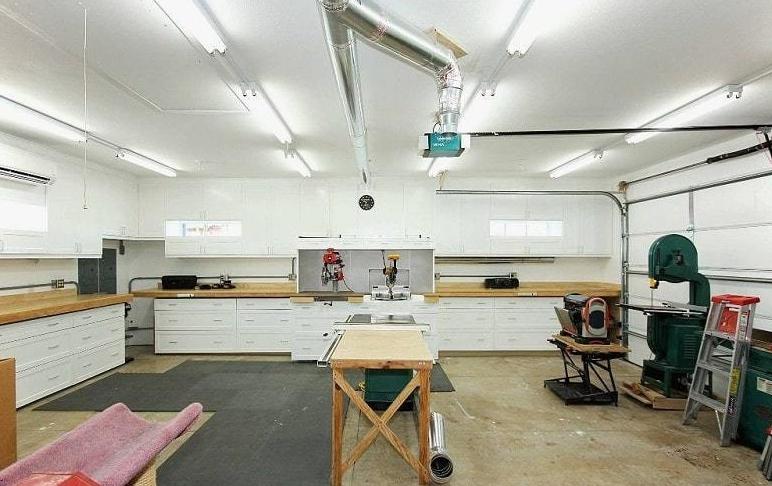
Lighting in a locksmith shop - features
A room intended for performing plumbing work is usually equipped with a variety of equipment, fixtures, power tools, which makes it object of increased danger. Locksmith workshops are divided into 14 categories and each has its own characteristics, which imposes certain requirements on the design and installation of the lighting system.
The main criterion by which the compliance of lighting with standards is checked is safety. Good visibility should be provided so that the work is done efficiently, the person does not strain his eyesight and the eyes are less tired even during long work.Lighting is divided into two types, each of which must be disassembled.
natural
This option is good because it does not require costs, but at the same time it has a number of features that can affect the illumination performance:
- natural lighting depends on the number and size of openings in the walls of the building, the larger they are, the higher the indicators, but at the same time, heat loss in winter increases. Also, openings can be on the roof - most often a lantern is made there, as they call a ledge with windows on both sides.
![natural light]() During the day, natural light can provide normal general illumination.
During the day, natural light can provide normal general illumination. - For control, the coefficient of natural light (KEO) is used, it is calculated based on the difference in light on the street and inside the workshop. In SanPiN there are no clear standards for metalwork workshops, there is only data for premises in technical schools and vocational schools, for overhead lighting the indicator should be not less than 3%, for the side - 1,2%. Measurements are taken at the opposite wall from the window at a distance of 1 m or at the level of the working surface.
- The level of natural light depends on the region, season, weather conditions and the presence of nearby buildings or trees with a dense crown. That is, this indicator is not constant and can change many times during the day.
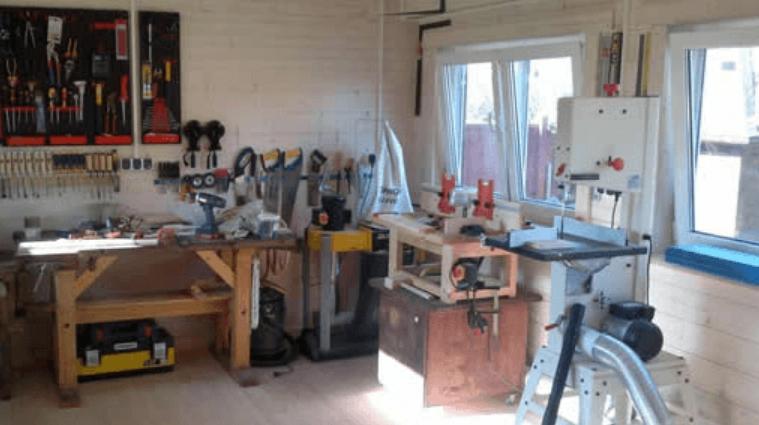
By the way! Windows should be washed periodically, as when the glass is dirty, the KEO is significantly reduced.
artificial
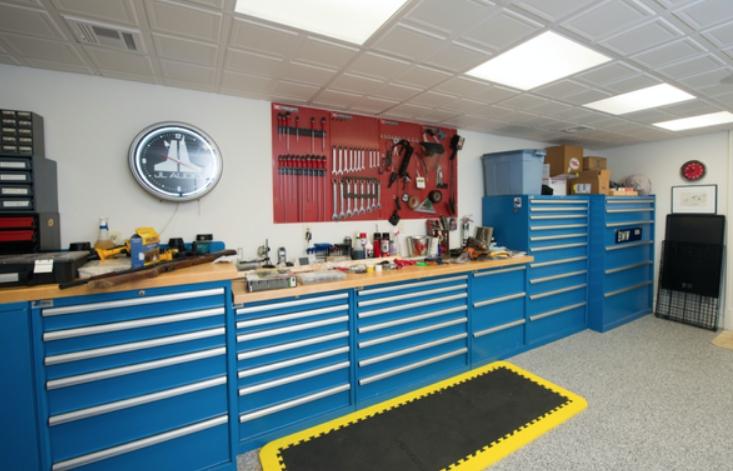
This is the main option in most cases, since it does not depend on external conditions and can be adjusted as needed. Lighting of this type is divided into three types:
- main light. Most often, these are lamps located in rows on the ceiling, their number and power depend on the size of the room and the height of the location. Most often, the characteristics are calculated in advance and are included in the project, which simplifies the choice of equipment and its installation.
- Local lightingIt is done separately from the main one. It is necessary to highlight areas in which it is necessary to provide good visibility for complex work. Most often, ceiling or wall lamps are used, located at a low height and highlighting a separate area. Lamps on a table or machine can also be used, they must be adjusted and placed on both sides, since right-handers need left-hand light, and left-handers need right-hand light.
- Combined lighting - the best option that combines both solutions, which is calculated in advance. In this case, local illumination cannot be used separately from the general one, since contrast zones will be created and vision will have to constantly adapt to changes in illumination.
Workshops use luminaires designed for difficult operating conditions with an increased level of protection against dust and moisture.
Requirements and norms
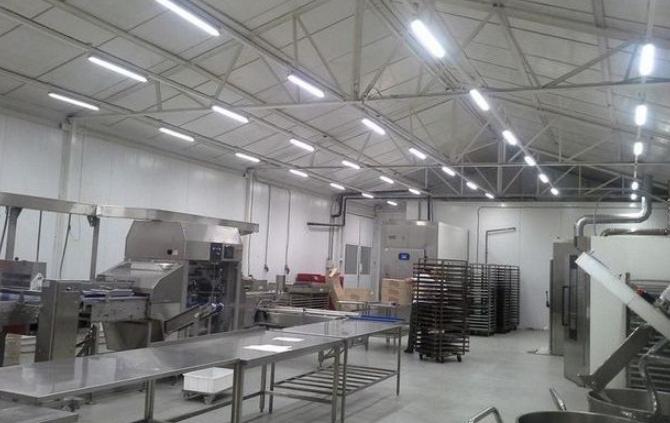
To figure out what kind of lighting is allowed in metalwork workshops, you need to know by what indicators it is normalized:
- illumination. The main criterion that provides comfortable conditions for vision. Depends on the nature of the work performed and can vary widely.
- Operational lighting - this is the average illumination in the areas in which work is carried out.It is necessary that there is a comfortable light environment around without sudden changes in lighting, as this has a bad effect on vision.
- Light uniformity. This indicator shows the difference between the average level of illumination in the room and data from the most poorly lit area. Therefore, it is important to correctly position the lamps in order to exclude the presence of heavily darkened areas.
- Discomfort fading indicates areas where eye discomfort may occur due to direct or reflected light. To avoid this problem, they select certain angles for the location of lamps, use diffusing shades and reflectors that direct light to the desired area. It is important to choose the right finish for walls and other surfaces so that the reflection coefficient does not exceed the established norms.
- Color rendering index shows how naturally the colors of surfaces are transmitted under artificial light.
- Ripple factor reflects the indicators of light differences and limits them within certain limits.
In specialized workshops that perform specific types of plumbing work, there may be special lighting requirements reflected in industry documentation.
Locksmith shop zoning rules
It should be noted that the entire territory of the metalwork workshop, except storage facilities, is considered a working area for which the illumination standards established by the regulations apply. They usually make up from 300 to 400 lx.
Maximum illumination is required in places where work is directly performed, here the standards are an order of magnitude higher and can reach 1000 Lux. At the same time, the illumination area is made at least 50 cm larger in all directions than the working area.Peripheral areas should not be too contrasting so as not to create unnecessary strain on vision. Them illumination must be at least 30% from performance in the workplace.
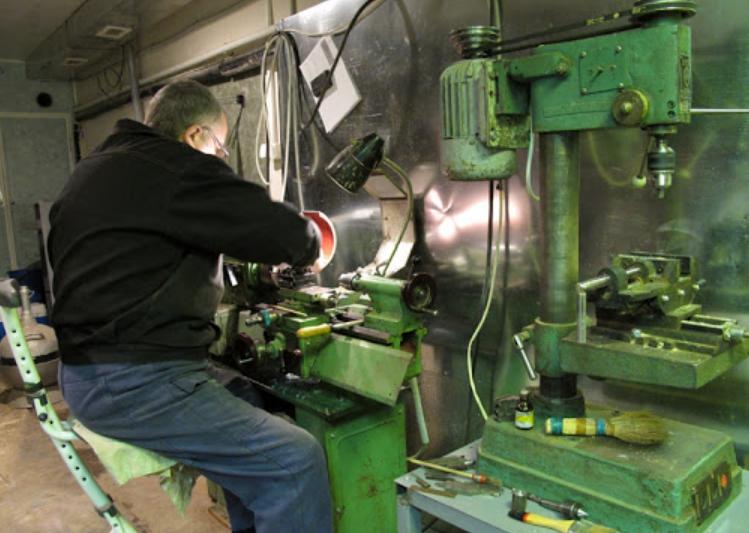
For machine tools, adjustable lamps are usually used, the brightness of which is selected for the equipment. They should use lamps with minimal flicker to eliminate the stroboscopic effect from rotating components.
Also, when normalizing, much attention is paid to color rendering index. It is important to choose the right color temperature fixtures, the closer it is to natural light, the better. It is optimal to use LED equipment that has minimal flicker rates, and the color rendering index is 80% and more.
Video tutorial on lighting the workplace in the workshop.
To ensure high-quality and safe lighting in a locksmith shop, you need to study the standards and select equipment in accordance with them. Pay attention to both general and local lighting. It is important that there are no drops, and flicker indicators do not exceed the established limits.