Why do LED lights flicker in the house?
You have decided to change the "gluttonous" incandescent lamps, incl. and halogen, winding the counter, to their economical LED counterparts. The store helped you make the right choice, checked their performance and showed you what shade of white light you will use in your living room or office. But it happens that LED bulbs of different power, reliably serviceable, blink at different frequencies after switching on.
What does it mean to "blink" or "blink"
The concept of “lamp blinking” is understood as the glow of a light source with intermittent radiation, “flickering” is an uneven or oscillating light. For example, a candle's flame fluctuates in the wind. They say the candle flickers.
In lighting engineering, the changing nature of the luminous flux of a lamp or lamp is called flicker. English flicker in translation means "flicker".
This is a subjective sensation of fluctuations in the spectral composition or light flux emitted by artificial light sources that are noticeable to the eye.
The lamp flashes when on
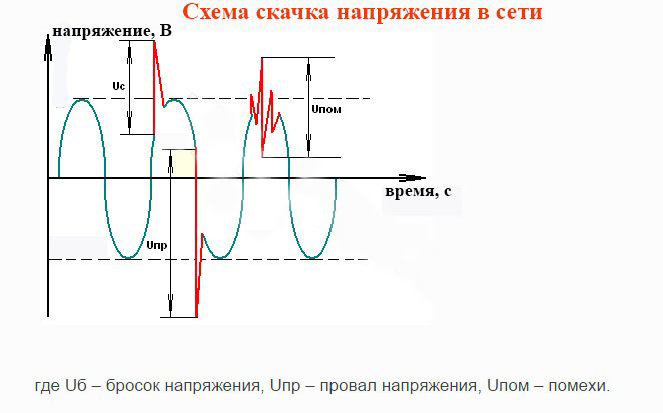
The reasons for the flickering and flashing of LED lamps in the on state are different. One of them is the abnormal operation of a power source that has electronic protection, for example, against current overload. It works at the moment when the current through the LED lamp exceeds the specified rated current of the lamp, for example, by 30%. Or when the voltage in the network goes beyond the operating limits. Electronic protection will instantly turn off the power supply and turn it on automatically when returning to normal.
Power surges
Particularly noticeable are the moments of switching on power supplies assembled according to the circuit of pulse converters of alternating voltage into a stable current or voltage. Their starting impulse can exceed five or even ten times the rated operating current for fractions of a second. Those. each switching on of an LED device - a strip, a spotlight or a lamp - can lead to voltage drops in the 220 V supply network.
Flashing can also be caused by lighting sensors, for example, human presence or movement sensors, twilight sensors, etc. Their incorrect operation can cause uncontrolled periodic switching on or off.
Similarly, software failures appear in control systems for dimmers or lamps, for example, in a "smart home".
Flashing due to low mains voltage
Low voltage in old household power networks 220-230 V 50 Hz can be when they are significantly overloaded by household electrical appliances. If earlier the electrical fuses at the entrance to the apartment were rated 10-15 A, now automatic RCDs (residual current devices) respond to a current of 25-50 A.
Small capacitance
This reason may manifest itself not so much in blinking as in flickering, i.e. in voltage or current ripples. You can see the flicker:
- lateral or peripheral vision;
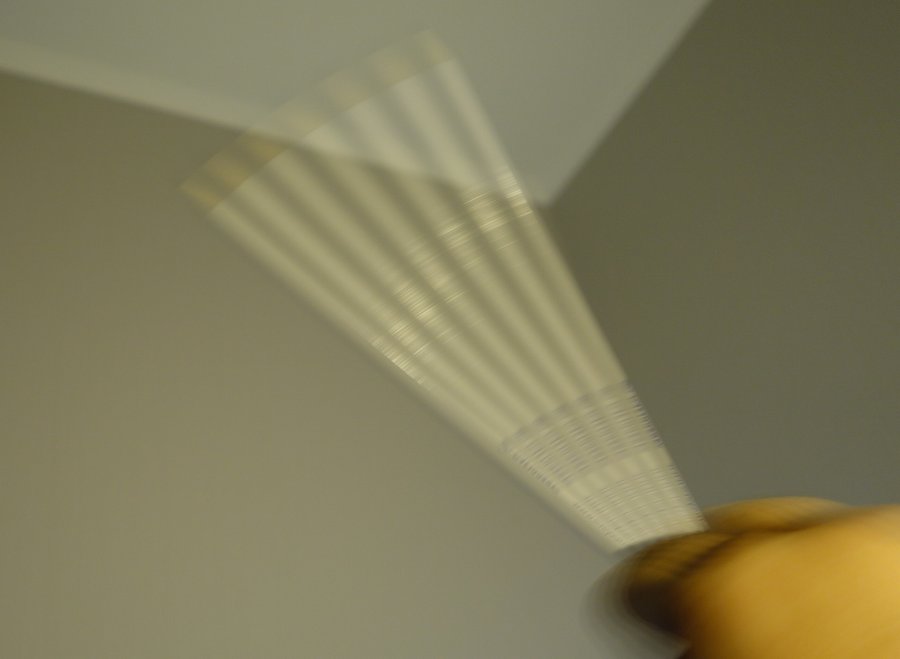
- using the "pencil test" - quickly move a pencil or ballpoint pen across the light stream from the lamp. The appearance of visible intermediate positions of the pencil indicates the presence of high pulsations of the light flux, and hence flicker;
- in certain phone modes, transverse stripes will be visible on the screen against the background of an object illuminated by a flickering light.
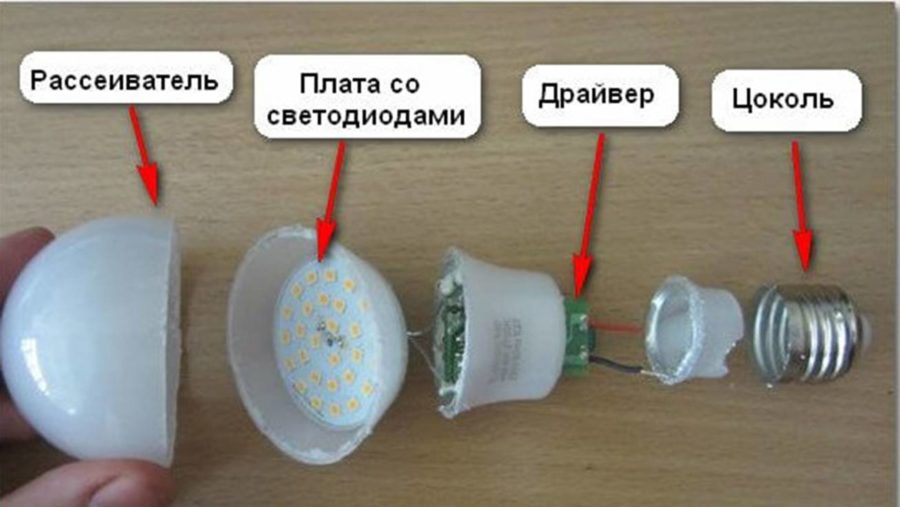
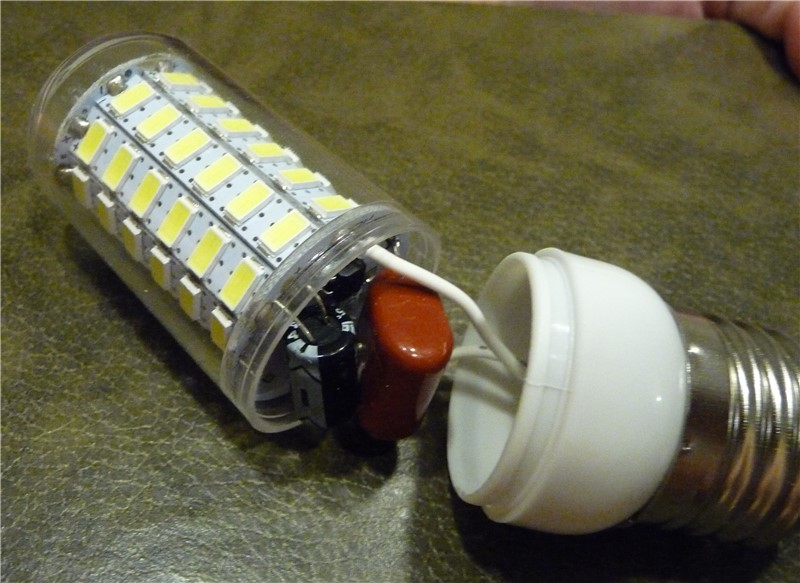
To eliminate or reduce flickering (ripples), you need to solder the filter capacitor. They disassemble the lamp by disconnecting the bulb from the base, remove the driver circuit board from the base and change the capacitor in the filter, or, if space permits, solder another one.
Off
In this case, there are several reasons for blinking. The main one is the current in the backlight circuit of the switch.
Blinking is eliminated in several ways:
- turning on several lamps on one switch, for example, in a chandelier;
- turning off the neon indicator lamp or LED - break the indicator circuit or remove the board with the diode or neon from the switch.
Poor quality LED bulbs
Poor workmanship of the LED lamp may cause it to flicker. If LEDs are used, which were stored, for example, in a garage with fuel vapors or exhaust gases. Sulfur in their composition can lead to corrosion of the contact surfaces of the LEDs. Then the volume resistance of the soldered place can change unpredictably. This means that the current through the diode and the brightness of the glow will change.
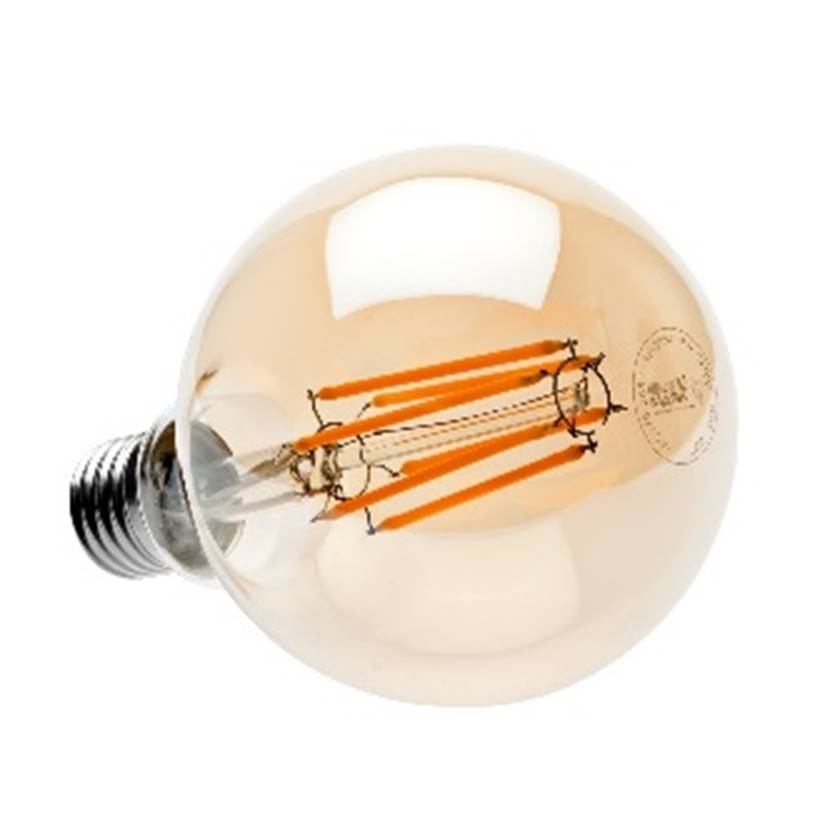
Flashing can also be caused by electromagnetic incompatibility of the power circuits of the electrical wiring and the control circuits of lamps. If they are laid in common cable channels, then surges of electromagnetic fields, for example, from the inrush currents of modern switching power supplies for high-power LEDs, can induce false commands on control circuits. For example, turning on / off the lamp or changing its brightness.
Due to switch backlight
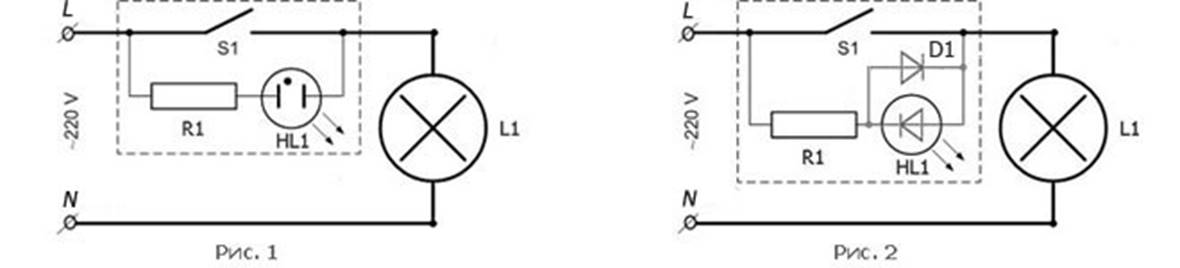
Illumination can be implemented using an indicator LED or a small-sized neon light bulb. It is indicated by the position HG1 in the diagram.
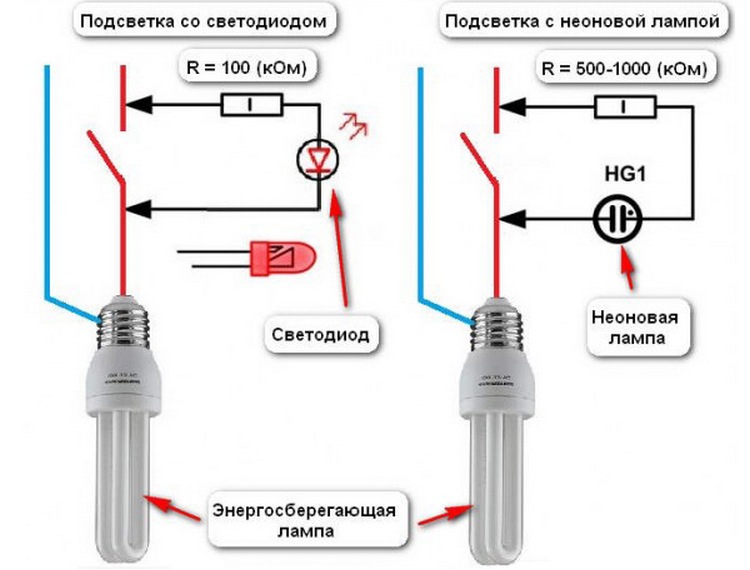
Such illumination was introduced into ordinary switches for incandescent lamps, so that in the complete darkness of the night their light could be easily seen, and the light did not interfere with sleep.
For the indicator LED to work, the alternating mains voltage was rectified by a half-wave rectifier on one diode and its operating current was limited by a resistor. A small indicator element - an LED or a neon light bulb - was connected in parallel with the contacts of the switch and a working current was passed, for example, an LED, with a value of one or tens of milliamps. The same current passed through the LED lamp. He gradually charged the filter capacitors of the power supply or LED driver. After a few tens of seconds, the voltage rose until the LEDs in the lamp opened, and they lit up. The capacitors in the power supply filter were discharged and the cycle was repeated.
Problems with electrical household wiring in old buildings
A common cause of LED lamp blinking is poor-quality wiring in the building. This is especially true for those built immediately after the war or in the 1945-1960s. The lack of resources in the country forced the use of temporary solutions that remained permanent. We are talking about the use of aluminum and copper wires in household wiring. If they were not connected correctly, copper and aluminum in buildings with high humidity formed galvanic vapors that had a high corrosive hazard.
Usually, aluminum under the influence of atmospheric oxygen is immediately covered with a strong and non-conductive oxidation film. In the atmosphere of the house, filled with various types of vapors and gases from people, plants and pets, the twists of copper and aluminum are actively destroyed in the contact zone and begin to spark at high currents.This causes lamps to flicker, especially LEDs that do not have high-capacity filter capacitors.
In such houses, a large total load of powerful electrical appliances can lead to voltage drops in the network in the evenings. And this is another reason for the flashing of the lamps.
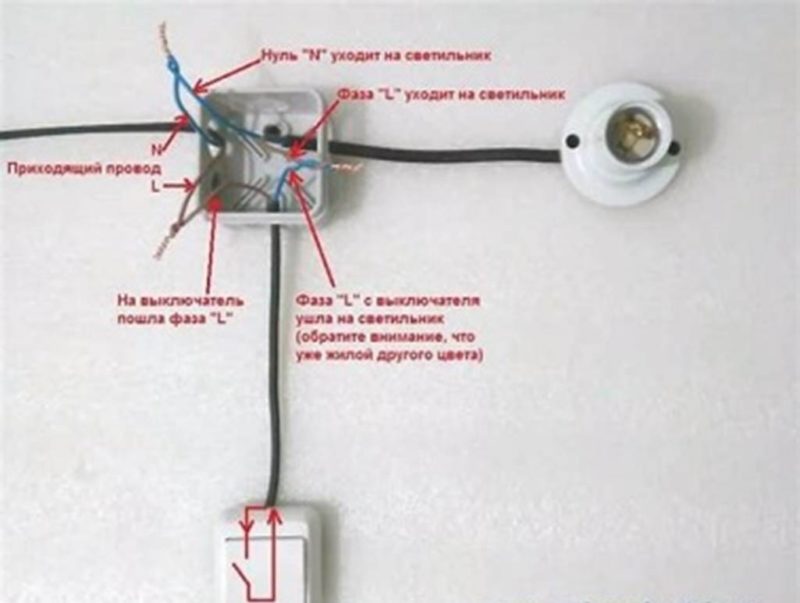
The reason may also be incorrect phasing of the wiring, when the phase and zero are confused. For incandescent and halogen lamps, this does not play a role, but LED or discharge, i.e. luminescent, can sometimes work with blinking.
How to remove flickering LED lamps
There are several ways to remove blinking and flickering:
- It is necessary to solder a paper capacitor with a capacity of 0.05 to 1 μF in parallel with a lamp or lamp with an operating voltage of at least 400 V.
- In parallel, turn on a resistor with a nominal value of 100 kOhm, up to 1.5 MΩ and a power of 1-2 W, through which the working current of the backlight will go.
- If a flashing lamp is installed in a chandelier, make the socket of one of the lamps non-switchable and screw an incandescent lamp into it. It will bypass flashing LED lights.
- Change the illuminated switch to a non-illuminated switch.
- Mount a pass-through switch with illumination and several closing groups. One of them, when turned off, should switch both power inputs of the lamp to a common wire.
- Feed the backlight elements from a separate circuit.
- Completely disconnect the switch backlight.
The problem of flashing and blinking LED lamps is solved in several ways. Most of them can be implemented with simple means, with your own hands and with a minimum set of tools. If this seems difficult or dangerous, call a professional electrician.
Related video: The main causes of flickering LED lamps
We get rid of the problem by shunting the switch.
We remove the pulsation or flicker of the LED lamp in three simple ways