Where does the pink light come from in the windows
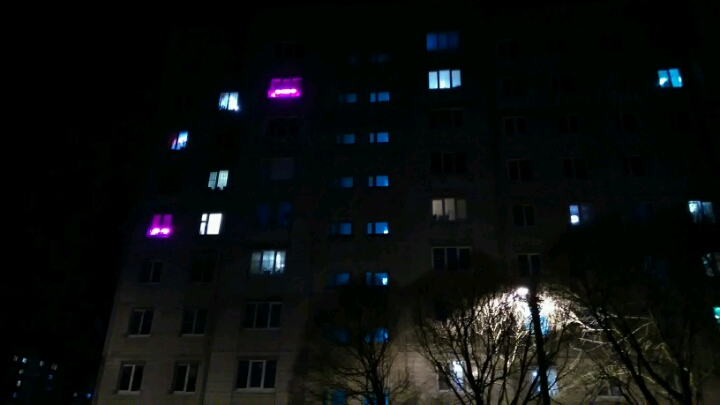
Passing by the houses at night, you can notice that some windows are lit with pink, and sometimes purple light. Many people think that this is neon lights installed for beauty, but this is not always the case. Some even take pictures and try to find an explanation on social media and forums.
Strange versions were put forward, for example, that apartments in which no one lives are illuminated in this way. This is naturally not true. Phytolamps emit such light. They compensate for the lack of solar ultraviolet, which plants need for full development and growth.
What does pink or purple light in windows mean?
If at night a pink light is visible in one of the windows, this means that there are plants on the windowsill that do not have enough ultraviolet light during the day. Before the advent of phytolamps, colored ceiling lamps were used for these purposes. But they are not as efficient as modern devices. With their help, you can grow not only flowers, but also seedlings on the windowsill.
Previously, special powerful incandescent lamps were installed for these purposes. As a result, I had to pay high electricity bills and sleep under bright lights all night. Such devices also had a detrimental effect on plants. If the leaves were tender, burns appeared on them.
What is it for
In order for plants to fully develop and receive a sufficient amount of trace elements, they need the main source of light - the sun's rays. If there is not enough light, the way out is to install a phytolamp with pink lighting. Additional lighting will help the seeds germinate, strengthen the root system and increase the green mass.
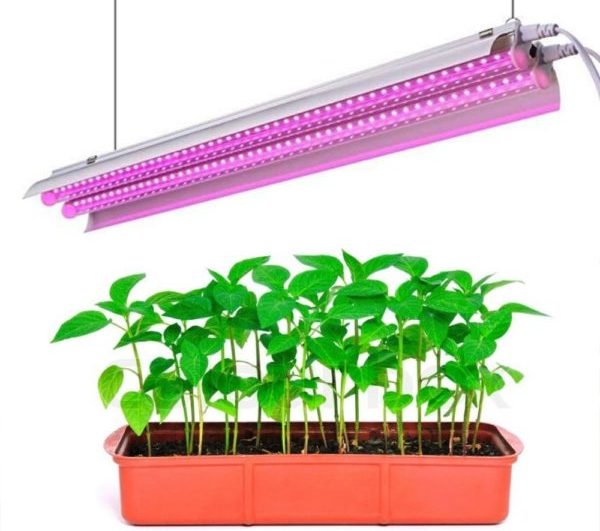
For example, if the seeds are small, they should not be planted too deep. Under natural conditions, a sufficient part of the ultraviolet passes through a thin layer of soil, which stimulates their proper germination. If you place seed pots under the lamps, this will be enough to stimulate the full development of the root system. In addition, seedlings will be immune to a number of possible diseases.
With the help of LED phytolamps, you can not only improve the conditions for germination, but also achieve an early harvest. The red glow is in the range from 600 to 700 nm. This is enough for:
- early fruit ripening.
- rapid emergence of large inflorescences.
- full germination and development of the root system.
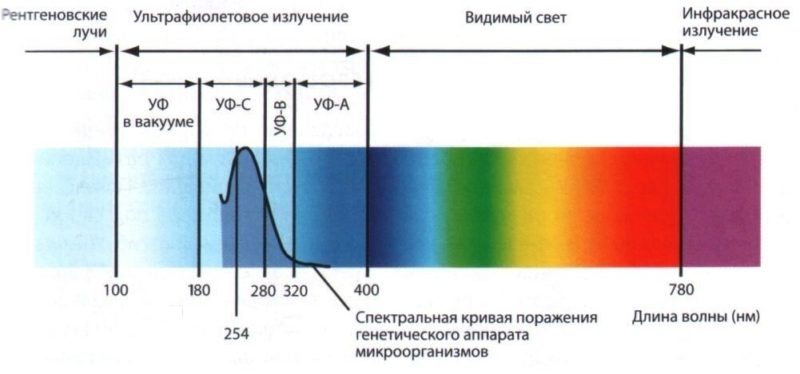
It is important to know that a lamp emitting a glow in the 400-500 nm spectrum is suitable for those plants that need to increase their green mass.
Growing plants
LED lamps are produced on the basis of blue and red crystals.They are best suited to replace natural ultraviolet radiation to illuminate plants.
Phytolamps are used when the windows of the apartment face north. Since many houseplants love bright sunlight, you have to install additional lighting, especially when it comes to exotic flowers or fruits.
If a violet glow, close to blue, is visible in the window, this may be a phytolamp for an aquarium where algae are grown. Modern models of lamps are produced in aluminum cases that are not susceptible to moisture. Also, they do not harm other inhabitants of the aquarium, stimulating the growth of algae.
Home lighting
It is likely that the pink lighting is just neon, which is installed under the cornice to create a cozy atmosphere and as an element of apartment design. Often this is LED lighting. It is mounted above the curtains or in the false ceiling. It can be in any of the rooms, regardless of whether it is a kitchen or a bedroom.
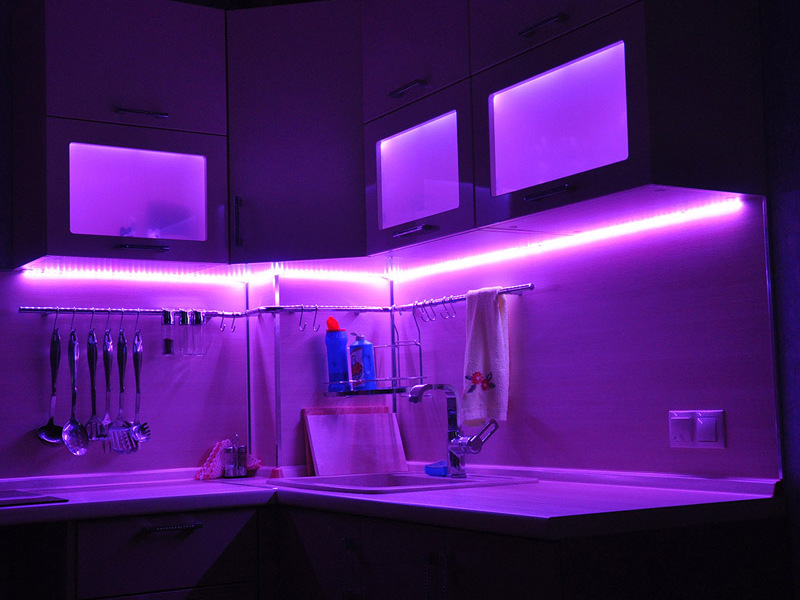
In any case, it is difficult to understand only by appearance, being on the street. The phytolamp can only be recognized if it is installed directly above the window sill and shines down on the plants.
What to look for when choosing
To use a phytolamp, you need to understand the principle of its operation, varieties and purposes of use, as well as have experience in growing flowers or seedlings. When choosing a lamp, you should pay attention to:
- emission spectrum. Experienced gardeners do not advise buying lamps with green or yellow lighting, they are useless and will not help grow seedlings. The most effective colors are blue and red.They can be combined, but it is better to use more red;
- guarantee. Such devices are designed for continuous operation. If the manufacturer has not given a guarantee for a year or more, you should not trust him. Gardeners recommend choosing fixtures with a warranty period of 2 years or more;
- area of action. Here it is worth relying on the number of plants that require artificial lighting. The more of them, the more lamps you have to buy. Sometimes it makes more sense to purchase a large lighting panel;
- wavelength. The manufacturer indicates the parameters on the packaging of the fixtures. For blue, the recommended values are 440-460 nm, for red 640-660 nm.
After the lamp is selected, care should be taken to properly install it, otherwise burns may appear on the leaves of the plants. Devices should be installed at a safe distance from seedlings or flowers, about 30-45 centimeters. After installation, you should bring your hand under the lamp to the same level where the plants are. If a burning sensation is felt, the lamp should be raised higher.
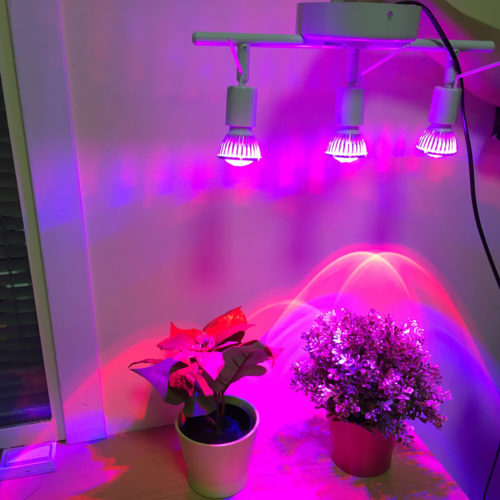
Installation of phytolamps can hardly be called a process that requires a lot of experience. Often devices are sold with tripods, brackets and stands. Some models include clip-on holders. They can be easily installed on the edges of boxes or containers.
How to choose such a light
For plant growth, the spectrum of light radiation is of particular importance. For photosynthesis, values in the range from 450 to 650 nm are considered the most acceptable.If we compare the energy efficiency of a full spectrum phytolamp and a bicolor phytolamp, the first one loses, but due to the breadth of the spectrum it gives plants more light, similar to sunlight. This lamp has peaks in the areas of photosynthesis, which allows you to capture neighboring zones of the spectrum.
Mature plants are better suited multispectral lamps. The emitted light stimulates the fruiting and flowering of most crops due to the intensity of red and blue light. The multispectrum is used to grow plants that are severely lacking in natural sunlight. Often these are large representatives of the flora with a dense green mass.
Test of six spectra of phytolamps on flowering. The perfect pepper lamp!
Conclusion
The only explanation for the purple or pink glow in the windows is the growth of plants or the presence of lighting as a design element. The rest of the options are nothing more than wild imagination. But sometimes illegal activities of citizens are hidden under this light: ultraviolet is necessary for growing illegal varieties of marijuana.