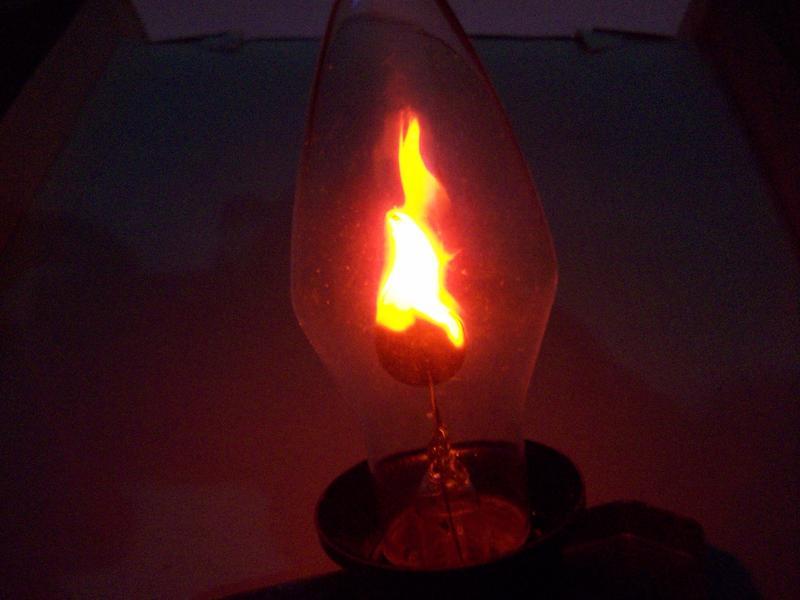
Description of the glow of a neon lamp
What is a neon lamp
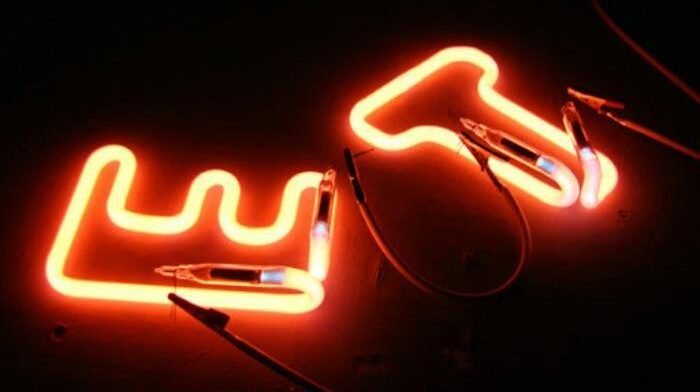
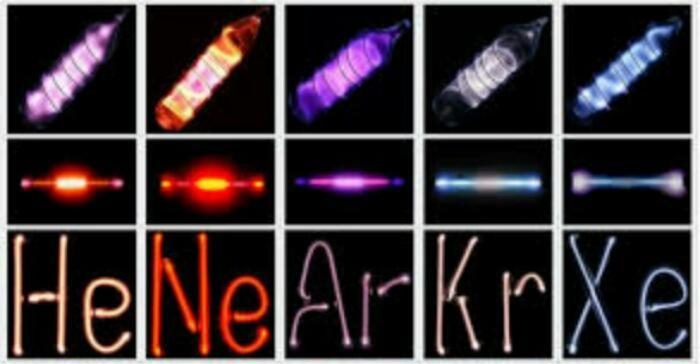
A low-pressure discharge tube filled with an inert neon gas is a classic neon - a lamp that produces a uniform orange-red neon light along its entire length. The inert gases used in lighting devices include helium, xenon, argon, krypton, but they have different emission spectra, which allows you to combine them and create different colors.
Structurally, neon is no different from other gas-discharge lamps, including fluorescent ones. To start the device, a current in the range of 0.1-1 milliamps is required. This sensitivity made it possible to use neon lamps in indicators of mains voltage, provided that a step-down resistor was used to protect against electric shock.
At the same time, the ignition voltage, depending on the length, diameter and gas filling of the flask, can reach 12,000 volts.Therefore, starting and maintaining the operation of the device requires the presence of an inverter in the circuit. The main application of neon lighting has found in the field of advertising and entertainment in Europe and the United States. In Russia, this fashion spread ten to fifteen years late, although the technology has been used in industrial glow discharge and indication devices since the 1950s.
Where do you get neon
The first neon was made in 1910 by Georges Claude, but for his invention he used the work of Maurice Travers and William Ramsay, English chemists who obtained neon by removing it from the air as a by-product. In atmospheric air, the maximum concentration of Ne reaches 0.00182%. This is very small on a planetary scale, but enough for its production on an industrial scale.
The way to obtain neon is to liquefy all the heavy components of the air, resulting in the formation of a residual non-liquefied component - the helium-neon mixture. Three methods are used to separate helium and neon:
- adsorption of neon by cooled activated carbon;
- freezing with liquid hydrogen;
- double rectification in the condenser-evaporator;
- cold distillation of the compressed mixture.
It is the latest technology that makes it possible to obtain gas of 99.9% purity on an industrial scale.
Video: Neon is the most INERTE gas on EARTH
Types of neon
Any luminous colored tube, sometimes curved in the necessary way, is erroneously called neon. However, in its classical form, such a lamp is made of a glass bulb filled with inert neon, with two or three electrodes at the ends.Indicator lamps are smaller than the LED element, and gas discharge tubes reach ten meters in length and 20 mm in diameter.
In the manufacture of the flask, it is given the necessary shape by heating the glass on a gas burner, filled with neon, and a few drops of mercury are added to brighten the glow. The device is unstable to mechanical stress, and its disposal requires special safety measures related to the toxicity of mercury vapor. However, the simplicity of the device limits its durability only to the integrity of the bulb, the composition of the electrodes, and the serviceability of the starting elements. In classic neon, there is literally nothing to burn out, so their correct operation can continue continuously up to 80,000 hours.
Flexible
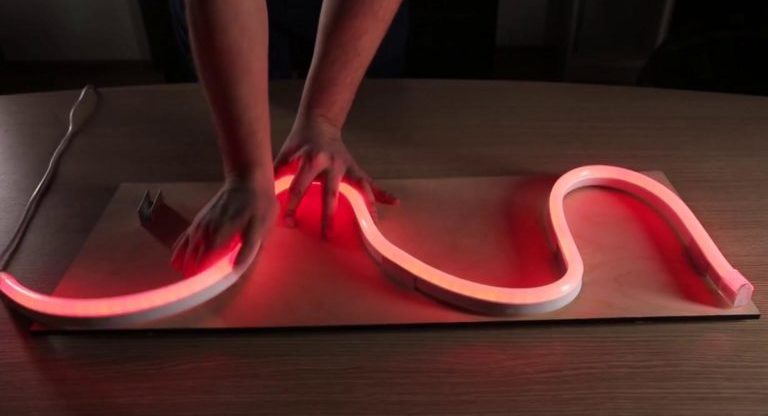
The complexity of operating glass lamps has led to the invention of alternative technologies that mimic neon lighting. As a replacement, LED strips have become popular, mounted in PVC or silicone strips, which scatter the beams of the bulbs so that the light is distributed evenly over the surface of the strip. The so-called flexible neon:
- easy to mount - it is installed in special fasteners or grooves with a bend of 180 ° and a bend diameter of 10 mm;
- mechanically stable and tight;
- available;
- economical in terms of power consumption - a 50 cm long strip is powered by a conventional USB connector with a voltage of 3-4 volts.
Cold
A kind of flexible neon, but technologically made according to a different principle. A phosphor is used as a light source, which covers a flexible copper wire.A thin copper wire is wound in a spiral over a layer of phosphor and a transparent dielectric. The whole structure has a transparent plastic shell. A spiral with a rod works on the principle of a magnetic coil, and it is the magnetic field that excites the glow of the phosphor.
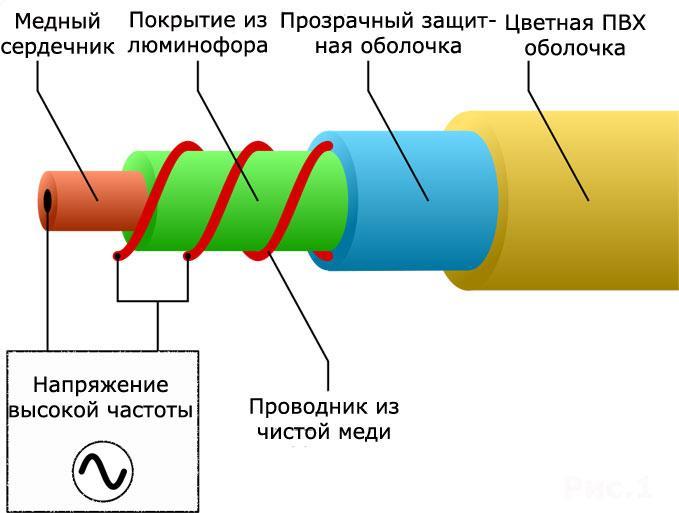
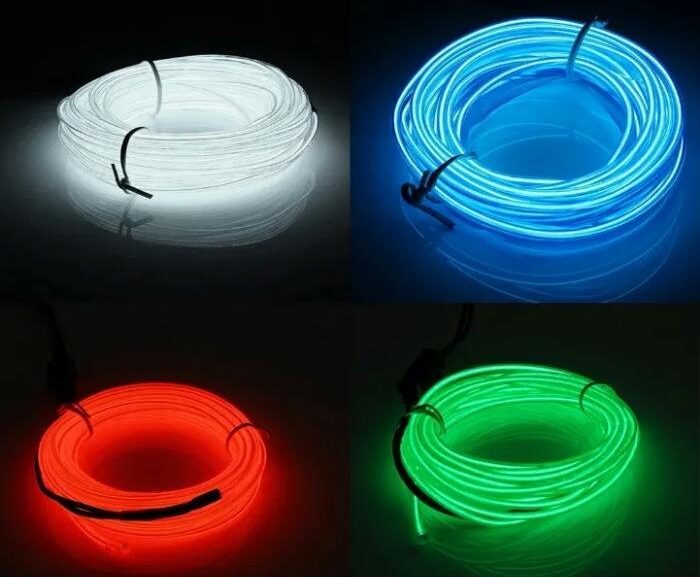
The operation of cold neon is possible when connected to the network through special inverters that produce current with a frequency of up to 6000 Hz. The lamp itself is a flexible, durable and sealed cord with a different glow color depending on the type of phosphor.
The diameter of the thread is often regulated by manufacturers only by the thickness of the outer shell, the inner part remains unchanged. Therefore, it makes sense to take a thick cord only if it is justified by the size of the structural groove.
A characteristic feature of cold neon is the complete absence of heating of the filament during prolonged operation. The only drawback of the technology is that with frequent sharp-angled bends along a small diameter, the phosphor coating is broken with the formation of dark zones on the wire.
Where neon lamps are used, examples with photos
Initially, the properties of neon bulbs determined their use in the field of electrical engineering as:
- mains voltage indicators in electrical appliances;
- control and indicator devices for determining the presence of voltage on the conductors;
- indicators of the presence of electromagnetic radiation - in the Balizor device, neon glows when exposed to an electromagnetic field;
- fuse in the alarm circuits.
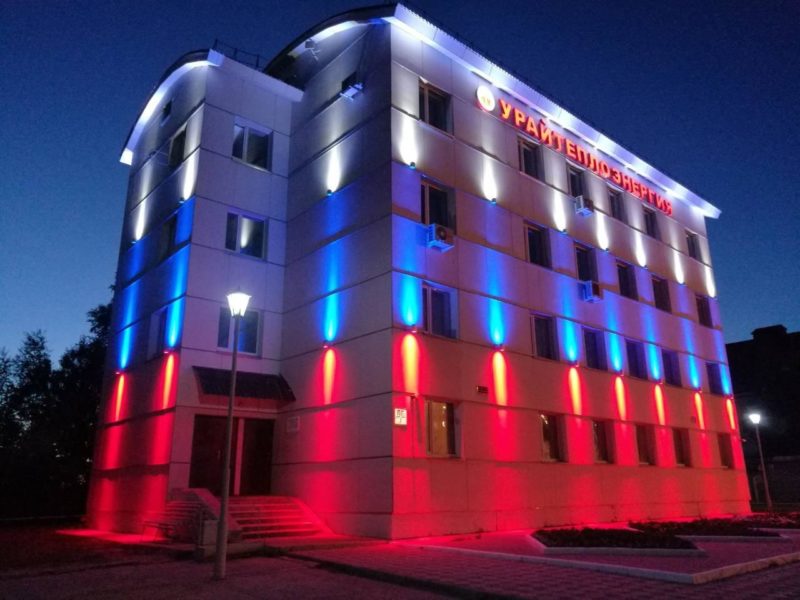
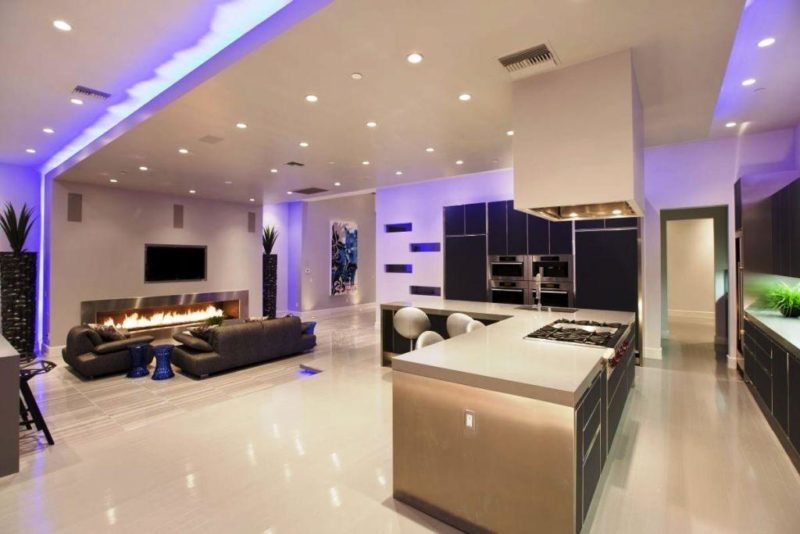
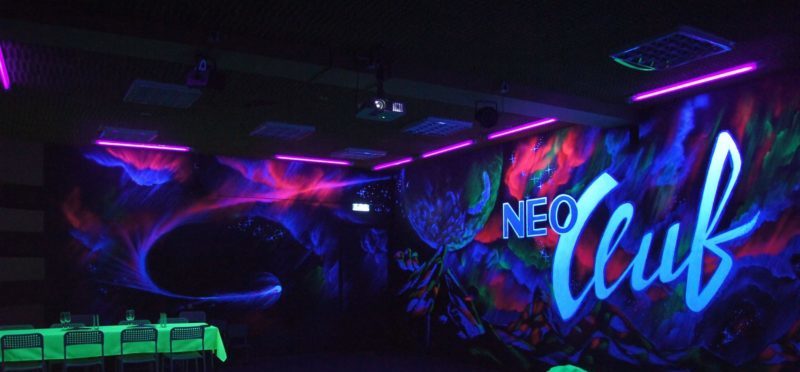
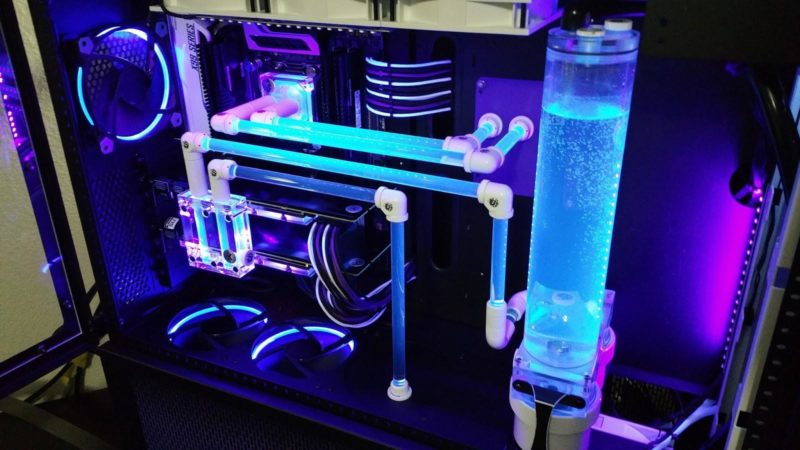
Neon lamps in modern times are used, for the most part, in the field of trade, design and entertainment.




How a neon lamp works
The classical gas-discharge neon uses the ability of neon to emit photons of light when gas molecules exchange energy in a rarefied medium under the action of electricity. When AC is connected, the glow is distributed evenly throughout the bulb. If the current is constant, then the glow is concentrated around the cathode.
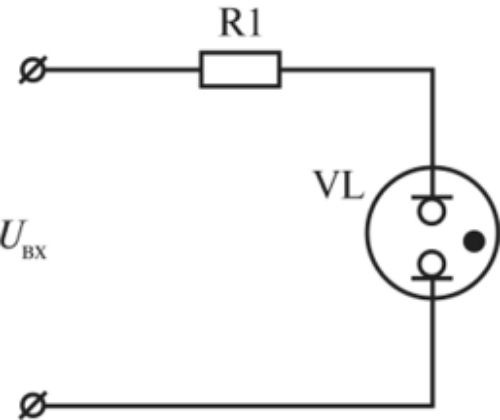
Wiring diagram
Indicator lights are connected through a step-down resistor according to the following scheme.
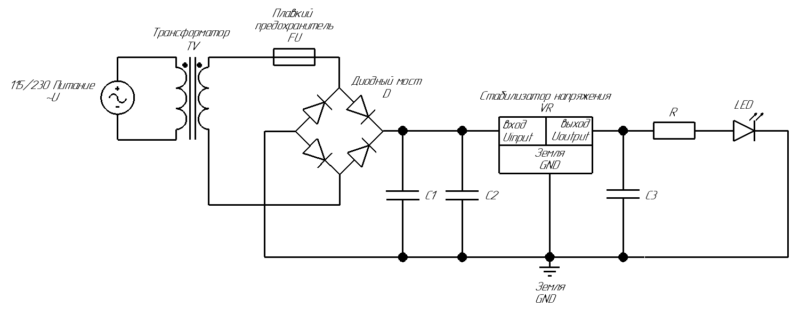
For example, lighting devices based on LED elements require a more complex connection scheme through a ballast, as in the figure below.
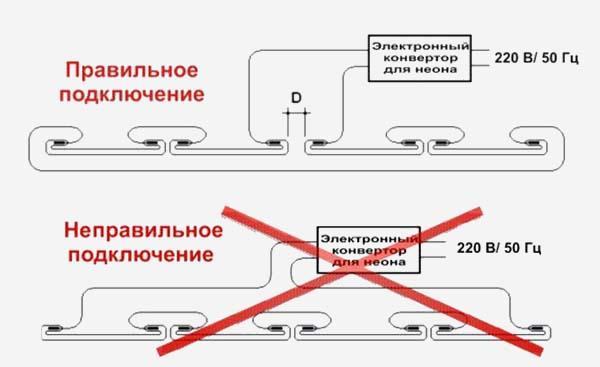
Connecting a gas-discharge neon implies the presence of an appropriate power in the inverter circuit.
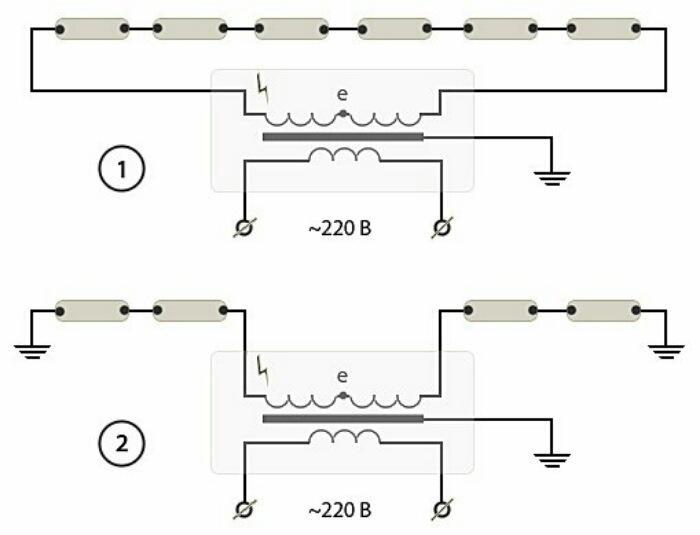
The first scheme is considered standard. The second allows you to reduce the length of the conductors, and in the event of failure of one of the sides of the circuit, the second continues to work.
Depending on the length and diameter of the gas discharge tube, a step-up transformer with the power shown in the table is required to start it.
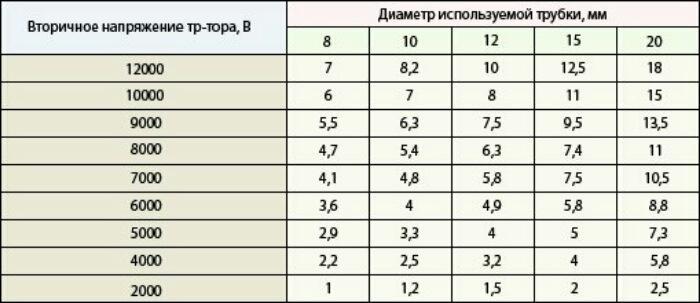
Connecting electrical fixtures to high voltage devices requires knowledge of electrical and electrical engineering. With an incorrect calculation, the discharge can turn into an arc, followed by a rupture of the bulb.
Cold neon is connected through an inverter to a 12 or 24 volt power supply, depending on the length of the luminous cord.
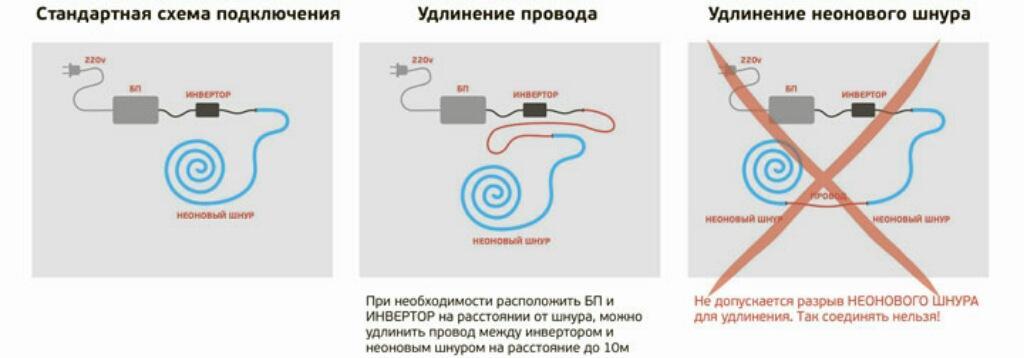
LED neon is connected in the same way as LED strips, but all connections are made through connectors, followed by sealing the junction, as in the video.
How to get a different spectrum of glow
RGB-ribbons in the presence of a controller are able to change the color, modes and intensity of the glow of flexible neon with an imitation of garlands or a strobe light. In gas-discharge lamps, different inert gases or their combinations with the color of the bulb glass are used to obtain different colors. For example, to obtain a green glow, xenon glowing in blue is pumped into a yellow flask.
Advantages and disadvantages
Discharge neon emits soft, and, if I may say so, more analogous light compared to other types of devices. Among the advantages of these lamps are:
- the uniformity of the glow along with the possibility of concentrating light on one of the electrodes when using direct current;
- durability - the absence of consumables in the design;
- operation of small indicator lamps directly from the 220 V network;
- the possibility of manufacturing flasks and cathodes of various shapes;
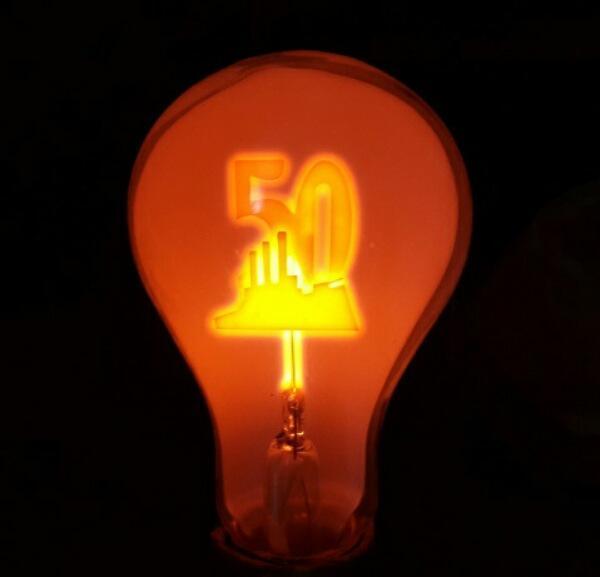
At the same time, the device of gas-discharge lamps is not without drawbacks and is considered obsolete for the following reasons:
- noise during operation from a step-up transformer;
- fragility of a glass flask;
- the complexity of recycling due to the presence of toxic mercury vapor inside the structure.
The main differences from the LED strip
The cord, which works on the principle of phosphor glow under the influence of an electromagnetic field, emits light 360 ° just like a gas discharge tube, but at the same time it bends in any direction and consumes less energy. The flexible strip on LED-elements emits light 180° in one direction and bends only in one plane. The advantage of a flexible LED strip imitating neon is its mechanical stability, ease of operation and the ability to control the mode through the controller.
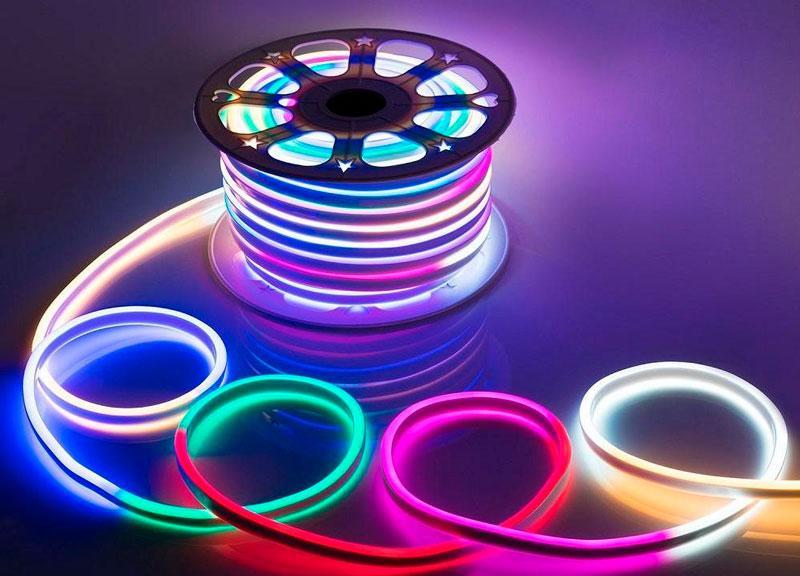
Of course, the RGB tape system is limited by the direction and radius of the bend, as well as a narrow glow vector, but these shortcomings are compensated by the ability to create unique light shows when using programmable controllers with different operating modes. At the same time, the luminous neon thread is thinner (up to 2 mm), and this allows you to mount it in narrow joints and crevices, which is important for auto-tuning and decorative upgrades of various devices.

It should be added that now the fashion for retro is returning, including analog, so the old discharge lamps do not lose their relevance in the field of design and marketing. The price and difficulty in operation made the classic neon a choice for wealthy buyers who want to stand out with their status and good taste.