When can you use fog lights according to traffic rules
Lighting equipment (SRT) of the car is an important component of ensuring safety when driving on public roads. The nomenclature of signal lights installed on a particular vehicle is regulated by international standards and determined by the developers within the framework of the rules. Responsibility for serviceability and correct application of the Service Station lies with the driver of the vehicle.
Rules of the road on the use of lighting equipment
The use of automotive lighting is regulated not only by the Rules of the Road, but also by the “Basic Provisions for the Admission of Vehicles”, as well as GOST 33997-2016, which replaced the canceled GOST R 51709-2001.The new standard, unlike the old one, regulates only the installation of additional lighting devices, leaving the presence of the main ones at the discretion of the developers. Also, general vehicle safety information is regulated in the Technical Regulations TR TS 018/2011.
Dimensions
In accordance with section 19 of the SDA, the driver must include parking lights, if he stopped or stood in the parking lot in conditions of limited visibility. When driving, the rules require you to turn on the dimensions only on trailers.
Structurally, the marker lights behind and in front of a wheeled vehicle (WTC) must be switched on from one control, and the voltage supply to the lights for lighting the rear state number of the car must also be combined with it. In practice, the dipped beam headlights are also lit with the same switch. This moment is not regulated by the rules, but in GOST there is a clause in which the obligation of such a combination is prescribed. The standard also prescribes the inclusion of side lights when the car dashboard lighting is turned on, but this requirement is not strictly prescribed.
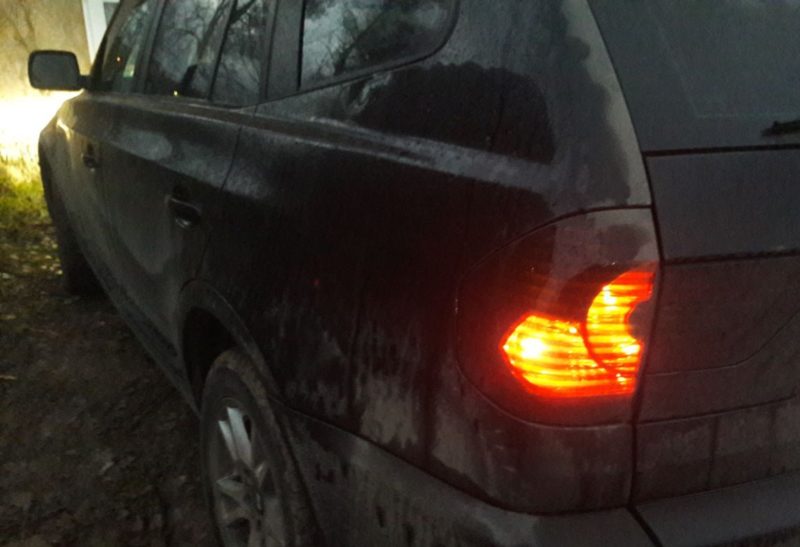
Without ignition of the dimensions, the low or high beam lights can only be turned on to give short-term signals by flashing or quickly switching near-far.
Rear markers must not be red and front markers must not be white.. This applies to all light-emitting devices in the vehicle, both basic and optional. The last category includes:
- spotlights;
- searchlights;
- emergency stop lights.
GOST also includes other lighting equipment in this concept.
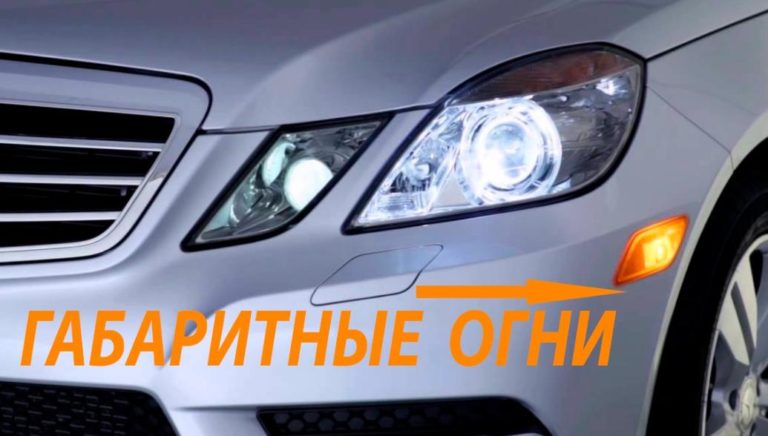
dipped beam
The rules of the road provide for the activation of low beam when driving:
- at night (after sunset);
- under difficult weather conditions (snow, fog, etc.);
- in the tunnels.
During the day, dipped beam lights are allowed to be used as DRLs (daytime running lights).
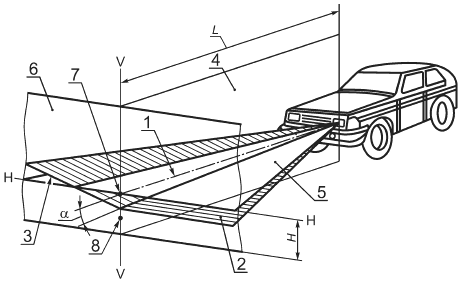
Dipped beam lamps are regulated in accordance with section 4.3 of GOST 33997-2016, then the luminous intensity is measured. It shall not exceed 750 candelas 34' up from the optical axis (indicated as α in the figure) and 1500 candelas 52' down from the optical axis.
high beam
Traffic rules require the inclusion of high-beam lighting in the same conditions as the low beam, with the exception of situations:
- when driving within the limits of the settlement on the illuminated road;
- when driving with oncoming vehicles or in other situations where it is possible to dazzle other drivers (for example, a vehicle driver moving ahead in the same direction through the rear-view mirrors).
In all these situations, it is necessary to switch the high beam to the low beam.
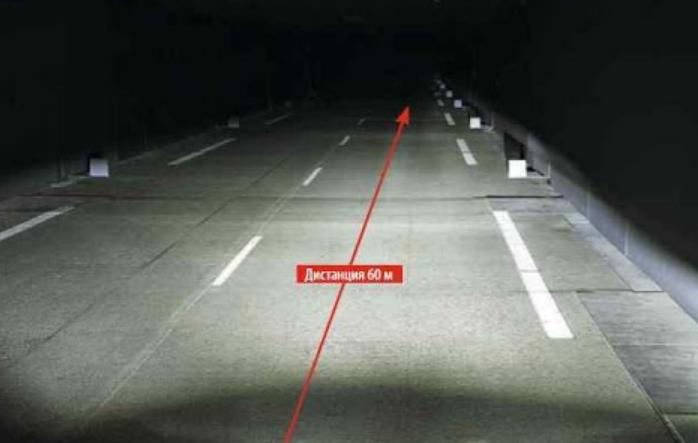
Also, the rules do not provide for the use of high beam lamps as DRLs (daytime running lights).
You can turn on the high beam lights at the same time or separately. Both headlights must be switched to low beam at the same time.
The luminous intensity of high-beam headlights is measured after adjusting the low beam and should not exceed 30,000 candelas along the headlight axis, so as not to dazzle drivers of oncoming vehicles at a long distance exceeding the recommended traffic rules of 150 meters.
When to Use Fog Lights
The use of these external lighting lamps is clearly regulated by the SDA clause “fog lamps” (clause 19.4). The driver must turn them on when driving:
- in difficult weather conditions or after sunset in combination with the headlights on in low beam or high beam mode;
- as daytime running lights instead of low beam system.
Fog lamps mounted on the rear of the vehicle can only be turned on in conditions of limited visibility.
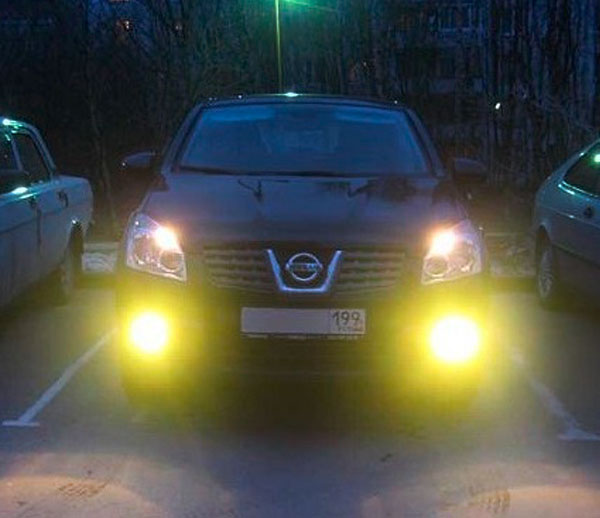
Rear fog lights must not be used in combination with brake lights. Their design provides for a brighter glow than the front ones. When braking, this can lead to blinding of the driver who is driving behind in the same direction.
Set up foglights in accordance with the vehicle manufacturer's instructions. If there is no instruction, the norms of GOST 33997-2016 are applied when adjusting. The glow color should be white or orange.
With what kind of light you need to drive during the day according to traffic rules
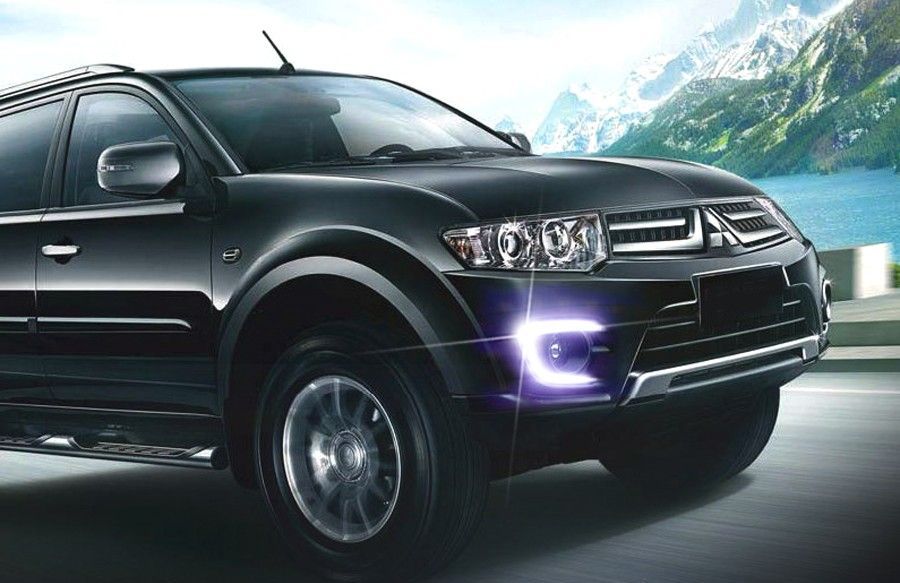
In this regard, the Rules do not allow discrepancies. During the day, drive with the headlights on low beam or daytime running lights (DRL). White fog lights or individual lights can also be used as DRLs.
| Lighting equipment | Application as DRL |
|---|---|
| Driving lights | Forbidden |
| Dipped beam lights | Allowed |
| Front fog lights white glow | Allowed |
| Orange front fog lights | Forbidden |
| Rear fog lights | Forbidden |
| turn signals | Forbidden |
| Dimensions | Forbidden |
| Lamp of illumination of the state license plate (rear) | Forbidden |
| Separate DRLs provided for by the design of the machine or additionally installed and registered with the traffic police as changes to the design | Allowed |
It is necessary to turn on DRL regardless of the territory of movement - inside the settlement or outside the city.
Which headlights should be used depending on the situation
The driver turns on other regular lighting devices independently, depending on the actual conditions. Their use in different situations is also regulated by traffic rules.
In case of poor visibility
In conditions of poor visibility, the Regulations require the driver to activate:
- on wheeled vehicles - headlights in the dipped or main beam mode;
- on bicycles - headlights or lanterns.
Lanterns can be lit on horse-drawn carts, but traffic rules do not regulate the obligatory installation of them.
With good visibility
With good visibility and simple weather conditions during the day, the use of lighting equipment is reduced to the use of headlights in the dipped beam mode or DRL (DRL).
Traffic in the tunnel
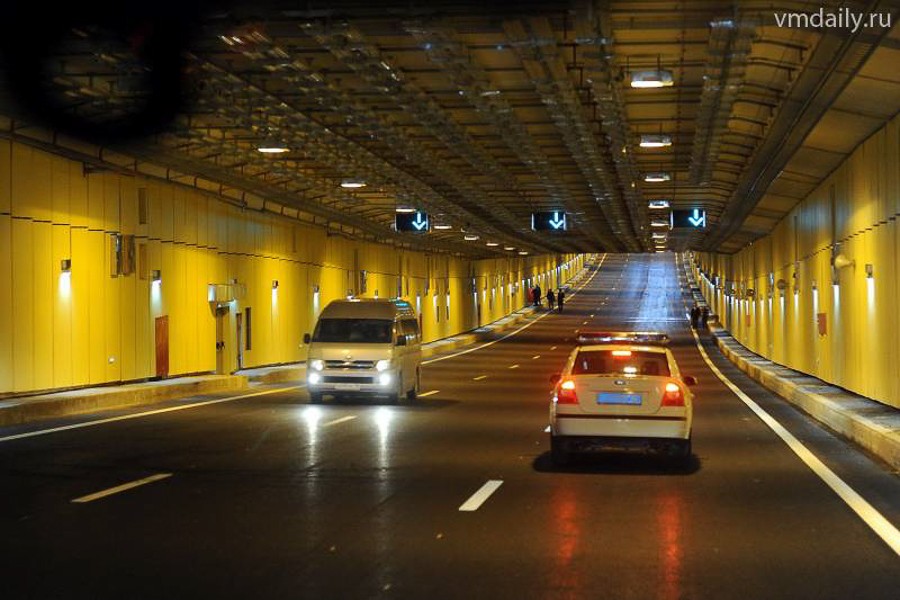
Driving through a tunnel is equivalent to driving after sunset or when visibility is limited. Therefore, the driver is required to turn on the headlights or lights, depending on the type of vehicle. Trailers in the tunnel must have side lights on..
Driving at night
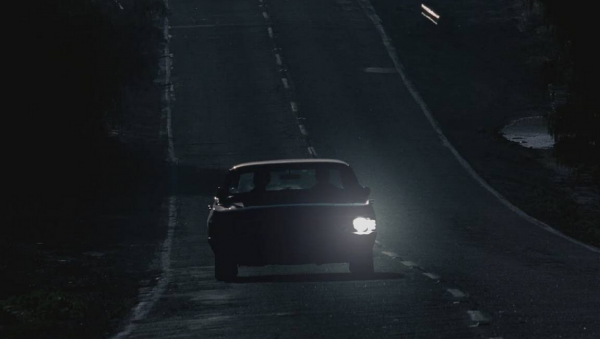
The use of lighting equipment after sunset is regulated by the same clause 19.4 of the SDA. The driver must turn on the headlights in the far or near mode, and in their absence, the lights. Clause 19.4 allows the use of fog lights at night in conjunction with conventional headlights, even in conditions of limited visibility.
Optional devices such as a searchlight and a searchlight, traffic rules are allowed to be used outside settlements only when there are no other cars on the road. Otherwise, the risk of glare is extremely high, as they emit light in a highly focused cone. Exceptions are cars of special services and in special cases. Unauthorized installation of such equipment is also prohibited.
And most importantly, in accordance with the aforementioned GOST, lighting equipment must be in good working order, and the main provisions prohibit driving with non-working light-emitting devices and even with unadjusted headlights. The driver must monitor the status of the devices, thereby increasing the safety of his own and other car owners.