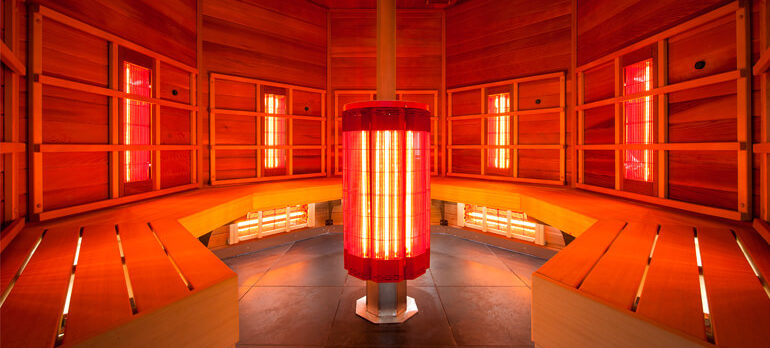
Characteristics and models of infrared lamps
Among the various sources of illumination, an infrared light bulb is in high demand. Her choice is obvious: space heating, treatment of diseases, drying of paint mixtures and so on. Consider the features of functioning, varieties, advantages and disadvantages of an IR lamp.
What is an infrared lamp
A device that emits electromagnetic waves includes the same components as a light source with a tungsten filament. IR lamp contains:
- incandescent element;
- a glass flask filled with a mixture of gases;
- plinth.
When tungsten is heated to temperatures above 570°C, energy is released. In infrared lamps, infrared light is provided by electromagnetic vibrations.A mixture of argon and nitrogen inside a glass bulb and an incandescent filament create conditions for the release of heat in the IR range.
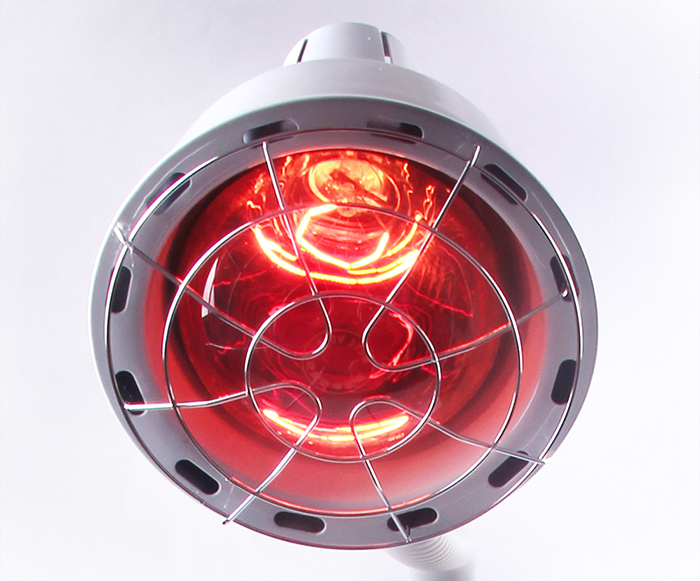
Visually, infrared waves are not visible, but an increase in the temperature in the room is felt. To change the color of the emitted energy, manufacturers make the bulbs blue and red. Colors regulate light output and minimize the risk of skin burns and blurred vision.
Varieties
Manufacturers offer lamps:
- without mirror coating;
- with a red flask;
- with a blue flask;
- with reflector;
- ceramic.
No mirror finish
This is a device with external reflective elements. It is used for lighting and space heating. The principle of operation of IR lamps that are not equipped with a mirror coating and halogen devices is identical. IKZ marking.
With red flask
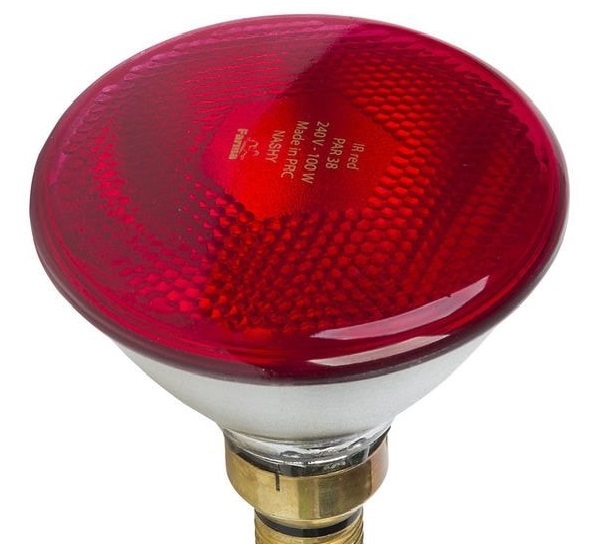
Illumination format labeled as ICPC. On the inside, the product is equipped with a mirror coating that optimizes the supply of IR rays in the right direction. A carbon/tungsten filament is used as a heating element. The scope of the lamp with a red bulb is to maintain the proper temperature in rooms intended for growing plants and keeping livestock.
With a blue flask
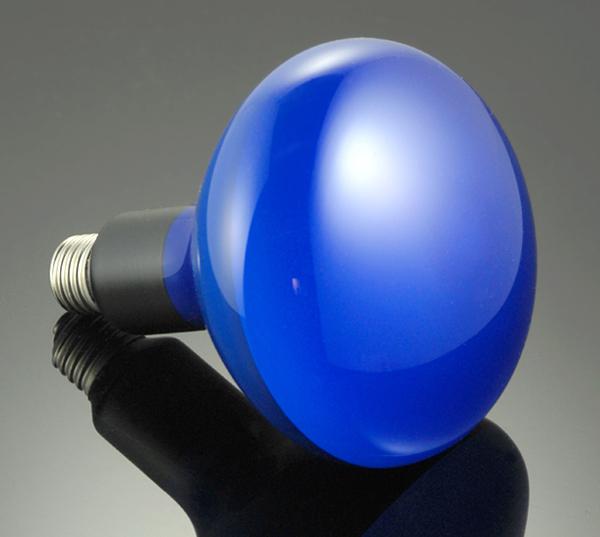
A type of product that is labeled as IKZS. The lamp is equipped with a mirror coating, the bulb is painted blue. The device is recommended for the treatment of ENT diseases.
with reflector
Lighting model, the flask of which is processed with mirror elements in the upper part. A powerful light and heat flux produces a reflector. The product is marked with the letter R.
ceramic lamp
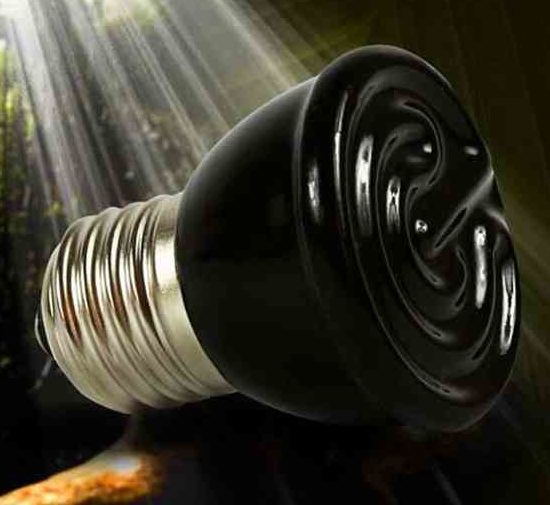
Lighting source for heating small areas or individual objects.The lamp is equipped with a ceramic body for mechanical strength and resistance to temperature extremes. Heating element made of fennel and nichrome.
Device
Infrared elements are autonomous light sources powered by an electrical network. They are made on the basis of lamps with a tungsten filament. But, emitting electromagnetic radiation, IR lamps do not heat the air in the room, but nearby objects that absorb heat waves, then give them away, which leads to an increase in the temperature in the room. In some devices, the infrared flux is distributed along a given vector. They are in demand if it is necessary to heat a limited space. IR lamps are more economical than convectors and oil-type radiators.
The power of the product, in which electricity is transformed into thermal radiation, can reach 50-500 watts. The flask is made of standard or pressed glass. Often, IR elements are equipped with an E27 base. A plastic cartridge for infrared heat sources cannot be used as it may melt when the lamp is heated to 80°C.
Contact with the switched on device increases the risk of burns, so it is additionally equipped with a protective grill. To increase the heating area, it is recommended to mount the IR lamp under the ceiling.
We advise you to watch the video: The simplest do-it-yourself light bulb heater
Criterias of choice
The choice of device depends on the purpose of its use. Consider the main criteria that are taken into account when buying an IR element.
Power
Depends on how much space will be heated. For small rooms, IR lamps with a power of 100-150 W are chosen.If the areas are large, 200-300 watt devices are used.
For maximum energy efficiency, the power supply characteristics of the network must be taken into account. A significant part of foreign-made models is powered by a 240 V outlet.
Recommended for viewing: Help in choosing infrared lamps.
overheat protection
Modern formats of IR elements can turn off automatically after 15 minutes of operation. In some product variations, the timer is set manually.
Budget modifications of lamps, in which electrical energy is transformed into thermal energy, are not always equipped with a mechanism that eliminates the risk of overheating.
Wavelength
Each model of the IR element is differentiated by the amount of light and heat emitted. The maximum brightness is given by devices with short waves (780-1400 nm). If dim light is needed, choose lamps with long wavelengths (3,000-10,000 nm).

Marking
Manufacturers of products apply the following designations - "R", "BR" and "PAR".
The first format of the IR element is equipped with a thin glass bulb and a glossy surface. The infrared lamp is recommended for space heating up to 16 m2. The glow angle reaches 60°. Lamps marked "R" are fragile, break easily, and are sold at a price of 150-250 rubles.
The light-transmitting part of products designated by the abbreviation "BR" consists of tempered/pressed glass. Lightweight lamp designed for long-term use. It is stronger than the "R" marked IR element. A convex reflector made up of cells ensures proper conductivity and reflectivity of electromagnetic waves. Lamps with the designation "BR" do not fail when exposed to moisture.Often they are mounted in bathrooms and saunas. Products can be purchased at prices ranging from 300 to 400 rubles.
In the manufacture of IR lamps marked "PAR" tempered glass is used. The light-transmitting part is based on compressed material with special cells. They direct electromagnetic pulses to the work surface. The product is recommended for livestock farms. The cost of IR elements marked "PAR" reaches 500-900 rubles.
Application area
The infrared lamp is used as the main and additional source of heating in industry and at home. IR elements save energy, therefore they are in demand and used in areas intended for growing plants and animals.

Space heating
To increase the air temperature in rooms of various sizes, a halogen heat emitter is used. Even with modest power indicators, it is able to heat overall objects.
IR elements are often installed on the verandas of residential buildings, in open-type catering points and gazebos.
To maintain a positive temperature in offices, apartments and houses, many people prefer to purchase an infrared source. IR element with a medium wavelength creates a comfortable environment for staying in the living room. Often lamps are used as additional heating. As the main source of heat, an IR lamp with long waves is relevant for a long time.
Thematic video: Heating a house with conventional lamps.
Greenhouse heating
Summer residents prefer to maintain a positive temperature in greenhouses with the help of infrared elements. Devices are effective for spot lighting. Heating plants provokes their growth in a vertical plane.Under the influence of infrared light, cultures actively produce chlorophyll even in winter. With the help of infrared lamps, summer residents can regulate the speed of germination and flowering of plants.
Animal heating
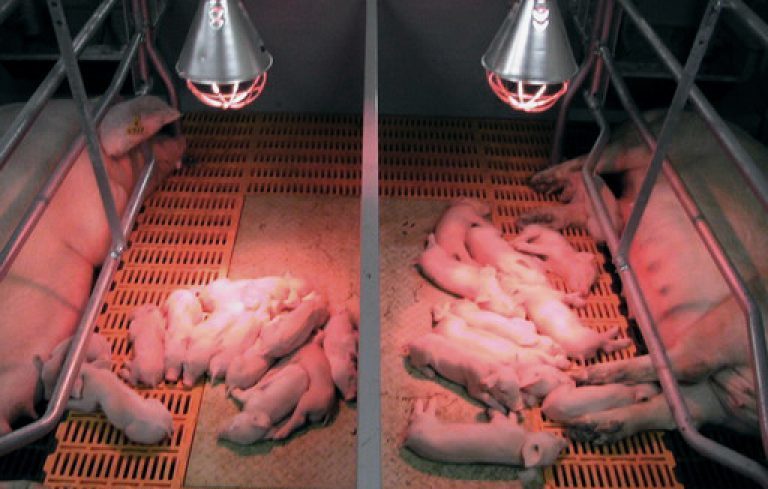
Products that emit electromagnetic waves are used by poultry and livestock farmers. Infrared light protects broods of goslings, ducklings, chickens and turkeys from the winter cold, which contributes to their normal growth.
To heat a nursery that contains animals, an autonomous lamp with a temperature control option is required. Lambs, calves and piglets after lambing are separated from adults and placed in sections in which heat is provided by infrared elements.
Treatment of diseases
Several decades ago, infrared rays were actively used for therapeutic purposes. With their help continue to treat:
- diseases of the musculoskeletal system;
- hypertension;
- a cold;
- dermatological pathologies.
IKZS format lamps improve well-being, normalize metabolism and strengthen immunity.
Home use
With the help of electromagnetic waves, culinary dishes are heated at home, herbs and spices are dried. Remote devices transmit infrared rays at a distance to control air conditioners, televisions and other household appliances.
Manufacturers
The world leaders in the supply of IR lamps are the following companies: Philips (Netherlands), Osram (Germany), General Electric (USA), InterHeat (South Korea). In production, they use high-quality raw materials, which provides their products with a maximum service life (more than 6000 hours).
Philips lighting fixtures are resistant to moisture, so their cost is higher than domestic counterparts. Dutch products are used to heat greenhouses, livestock farms, and bathing facilities.
IR lamps with a power of 150-375 W of the German company Osram are used for drying paint and varnish coatings.
InterHeat products are in demand among farmers who grow young poultry.
Reflector lamps "General Electric" are used to illuminate apartments and office space.
Advantages and disadvantages
To minimize the risk of burns, it is necessary to maintain a certain distance from the source of electromagnetic waves (1-1.5 m).
Conclusion
Energy efficiency, economy, health benefits, ease of installation and a variety of applications are the reasons for choosing infrared lamps. They are a worthy alternative to fluorescent devices, LED elements and traditional light sources.