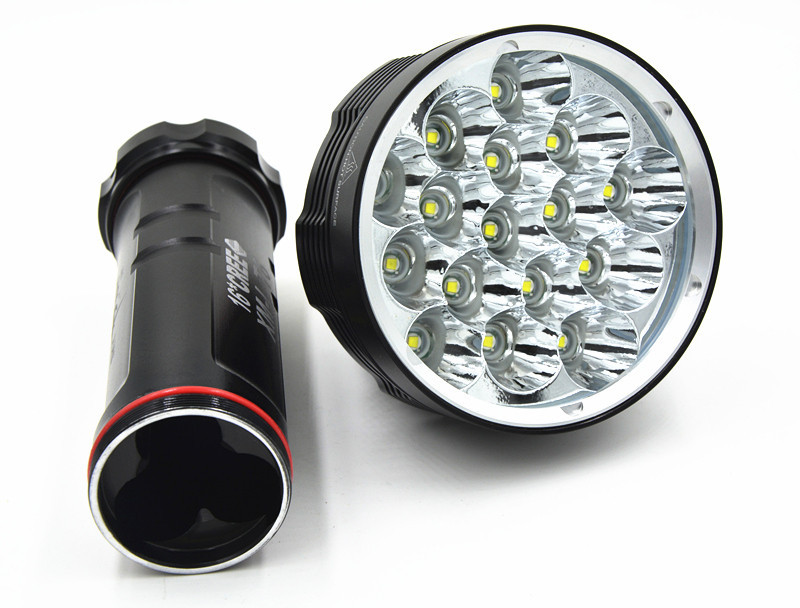
What LEDs are used for flashlights
To understand which LED is best for a flashlight, you need to familiarize yourself with the varieties of this element. If lighting of dark rooms or streets is required, the choice can be stopped on a bright flashlight with white LEDs. This will be enough to see the road in front of you for about 15-20 meters.
When it comes to a portable lighting fixture that has to cope with more complex tasks, you need to pay attention to the luminous flux. For example, an expensive and powerful flashlight can illuminate a large area due to the enhanced beam.
Types of flashlights with LEDs
There are several types of flashlights that use LEDs, namely:
- in the form of a keychain. This is a miniature product for lighting objects at a distance of 1-2 meters or closer;
- universal. It is useful on the street where there is no lighting, as well as in everyday life. The flashlight is compact and fits comfortably in the hand. Often has a metal or plastic case.The optimal indicator of the luminous flux for this variety is 30 Lumens;
- tactical. Purchased by hunters, rescuers, military and other special services. These devices are distinguished by reliability, advanced functionality and power supply. The luminous flux can exceed 300 Lumens;
- tourist. The product is distinguished by increased power supply, the ability to adjust the angle of the light beam and versatility. Most models are equipped with additional accessories, such as an alarm device;
- lamp. Suitable for lighting a halt place on a camping trip or a tent;
- underwater. Used by divers and is waterproof;
- search. The flashlight is designed to be carried in the hand. Differs in the increased brightness and range of a luminescence (up to 300 meters). Has a battery compartment.
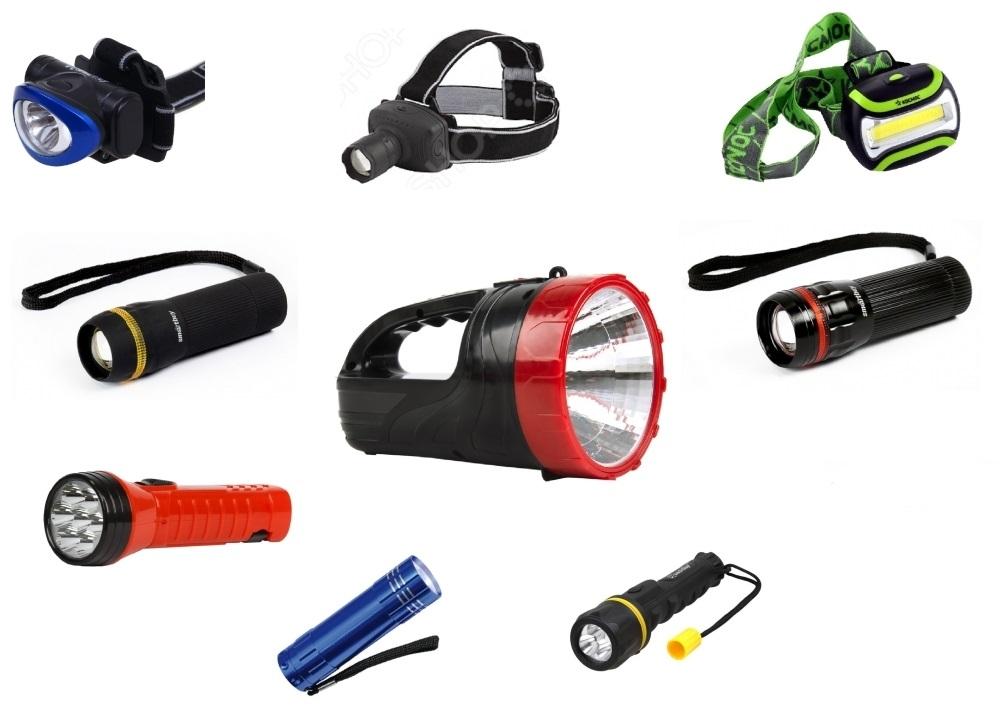
Speaking of LEDs, depending on the type of flashlight, they are equipped with SMD, LED chips or super-bright five-millimeter diodes for signal-type flashlights. It was the latest chips that used to be equipped with almost all LED lights.
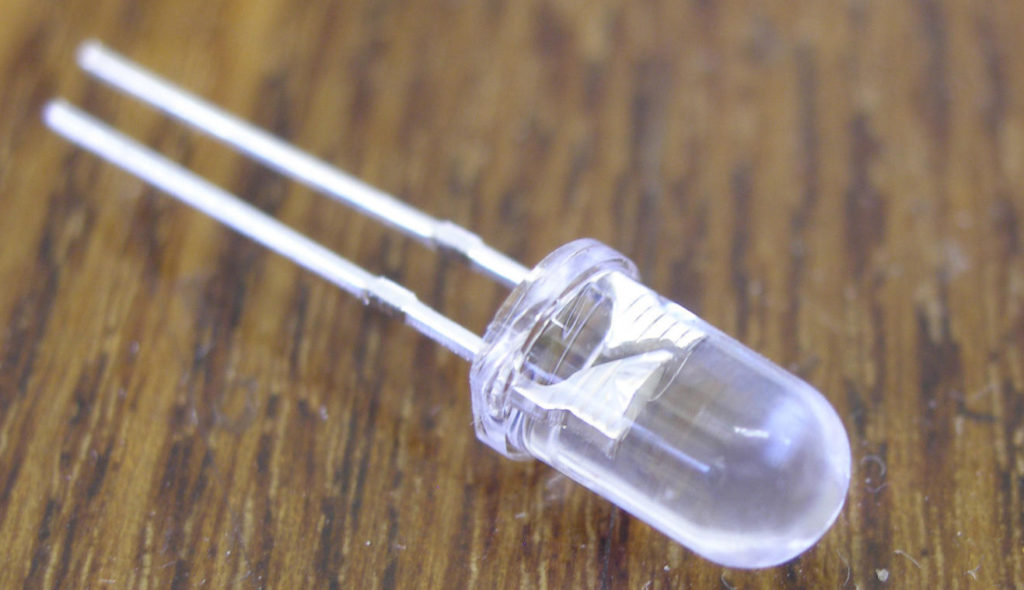
Their main advantage is low power consumption and compactness. The first powerful flashlights were equipped with several signal diodes installed on the same plane. Each of them had its own reflector, which directed the light flux to the same point with the rest. This design is still used for search instruments.
Types of LEDs in flashlights
Every year more and more flashlights with improved LEDs appear on the market. The most popular and high-quality chips are from Cree inc., such as XR-E, XP-E, XP-G, XM-L.In addition, the latest models of XP-E2, XP-G2, XM-L2 LEDs are in demand, they can be found in medium and small flashlights.
LEDs from Cree, which are often used in flashlights, are divided into several groups according to color temperature, namely:
- 1-2 group - cold light (5250K);
- 3-5 group - neutral (3700-5250);
- 6-8 group - warm (below 3750K).
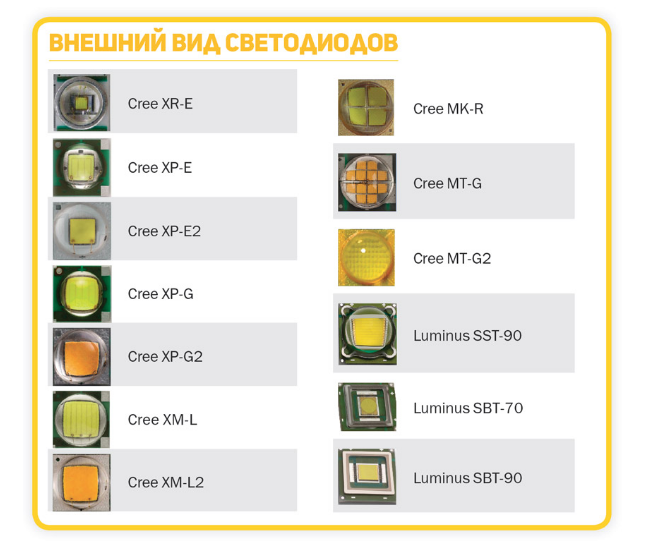
Speaking of MT-G2 and MK-R LEDs from Luminus, they are installed in large search lights that run on 2 batteries.
Also, LEDs are divided by brightness. This parameter is determined using a special code. When choosing LEDs, it is worth considering their dimensions, as well as the area of light-insulating crystals. If it is small, this indicates that the flashlight shines far when the beam is concentrated at one point. To obtain a wide diffused light, you will need a large reflector, which will affect the dimensions and weight of the product.
What is the brightest and most powerful LED for a flashlight
When trying to choose an LED for a flashlight with increased brightness characteristics, you should know that such parameters do not provide high range. However, the increase in these characteristics will have a positive impact on the indicator.
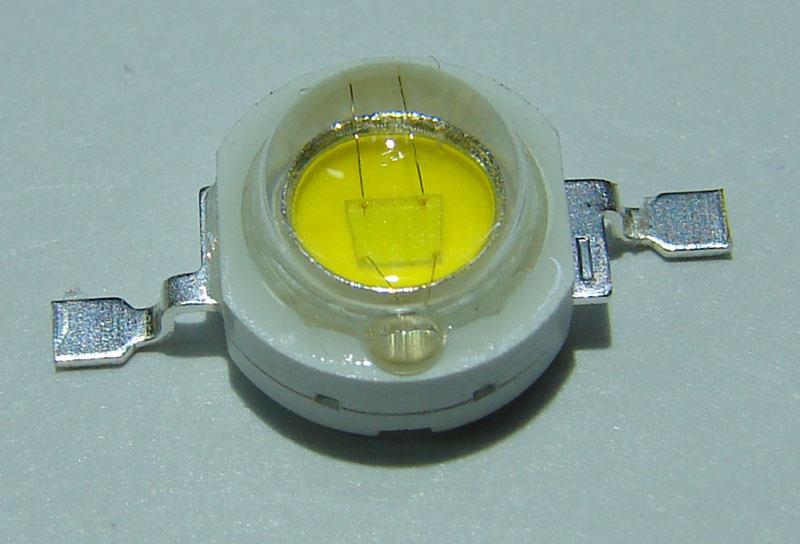
The main role is always played by the LED in conjunction with the optics. A 500 Lumen device sometimes shines farther than a 5000 Lumen flashlight. If you need the brightest and at the same time long-range flashlight, you should focus on devices that are assembled on the basis of the XHP70 LED, which produces 6000 Lumens.
Flashlight LED selection
When choosing a diode for a flashlight, the following should be considered:
- optical system;
- luminosity;
- appointment;
- design features. This refers to protection against mechanical damage, dust, moisture, as well as a way to hold the device in your hand;
- lamp power;
- battery capacity;
- Colorful temperature;
- optical system.
To assemble a powerful flashlight, it is recommended to install LEDs from Cree from the XM-L and XM-L2 lines. For projector models, it is better to buy chips from the MKR and MT-G2 series. For the brightest flashlight, Luminus SST diodes are purchased.
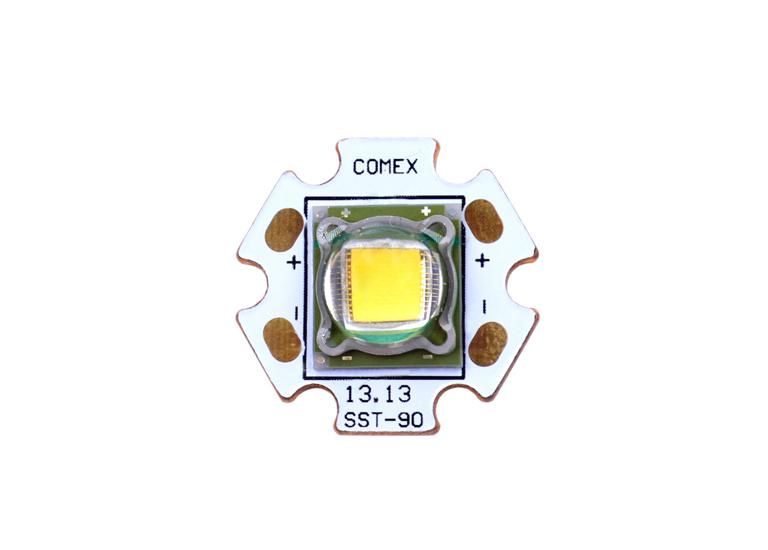
You also need to take into account the angle of the glow. LEDs of the XR, XM and XP series have an angle of 90 to 120°, and the luminous flux will be 280 lm. The power of the device in this case will not exceed 2 watts. Since the most powerful product requires current up to 13000 mA, its figure can reach 40 watts. Several types of batteries are sometimes installed in the flashlight, namely:
- lithium polymer;
- lithium-ion;
- nickel-cadmium;
- nickel ion.
If it's a flashlight, regular AA batteries will do. Batteries are installed in professional models. The best option is considered to be lithium-ion, which have more power with a compact size, as well as high heat dissipation. Their only disadvantage is the rapid discharge at low temperatures.
Replacing the LEDs in the flashlight
When you managed to figure out the choice of LED, you can begin the process of replacing it. Flashlights in most cases differ only in the number of diodes and the type of case, so the replacement is carried out according to the same principle. For work, prepare the following:
- tweezers;
- multimeter;
- soldering iron;
- screwdriver;
- flux and solder.
It should be noted that additional materials and tools may be needed in the process.First you need to disassemble the lamp. The first step is to remove the power sources (batteries or accumulators). If it's a pocket or search light, the battery compartment is most likely behind the cover.
Next, you can proceed to remove the protective glass. To do this, unscrew the front cover. The glass is sometimes removed separately or attached to the lid itself. The reflector is then removed. It just needs to be removed or unscrewed.
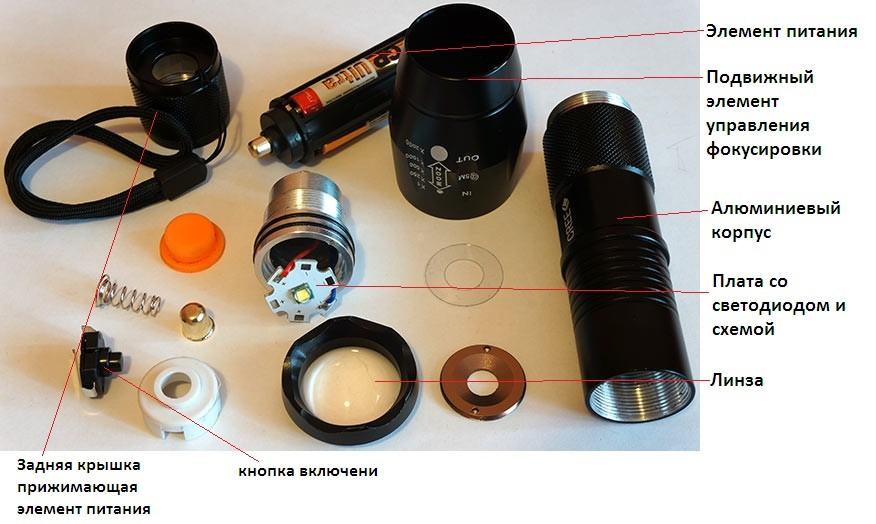
The next step is to remove the diodes. Sometimes they are combined with a reflector. In this case, disconnecting them is quite simple, since the board is connected with small screws to the reflector. If this is a more expensive flashlight, it will have to be disassembled with a hex wrench. The contacts are soldered with a soldering iron, and the LED is carefully removed with tweezers.
We advise you to watch the video: Replacing the LEDs in the lamp.
Before buying a replacement LED, it is worth considering that the substrate must match the configuration and dimensions of the element being removed. Otherwise, the master will have to make cuts for the wires. Do not forget about the purpose of the flashlight. So, different models of diodes are suitable for diffused light or increasing the range characteristics.