Schemes and varieties of studio light
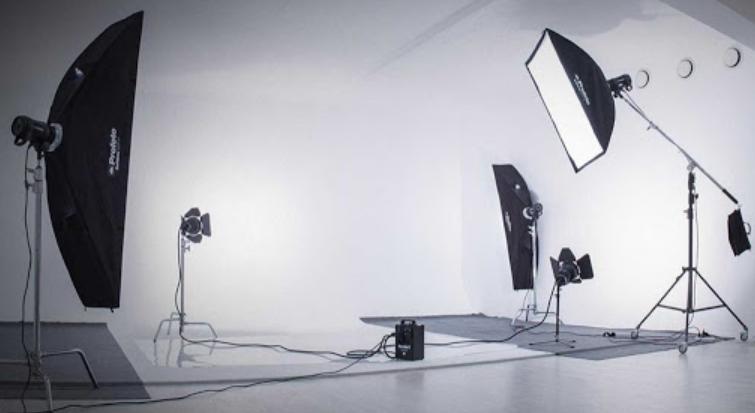
Studio lighting is the main element that affects the quality of the photo and allows you to achieve the desired effects. It is impossible to professionally engage in photography without knowing the basics of lighting and using schemes designed for a specific situation. In addition to the basic equipment, additional elements will be required, it all depends on the features of the shooting.
Types of studio light
There are several options that differ in location, intensity and other features. To choose a specific one, it’s worth sorting out all of them and finding what works best for a particular shoot. Setting the light is carried out due to several basic options, knowledge of the classification is mandatory even for novice photographers, since this is the basis of all work:
- key light, it is often called the main or main. This is the basis that sets the light and shade design, the remaining options are used as auxiliary ones. It can be either soft or hard, it all depends on the features of the shooting and the effect that you want to get in the photo.In classical systems, key light is usually one and a half times brighter than other options.
- filling, is necessary to correct the flaws that may occur when using the main light. It brightens the shadows it gives the main lighting and is located from the side of the photographer. This is because the effect of fill light on the camera can only be judged from where the picture is taken. The light source is usually a reflective panel or softbox. With this element, you can lighten deep shadows, highlight the face and give the photo more life due to the second flare in the person's eyes.
- background lighting. Here, both one light source and two, located on both sides and equipped with light-shaping additions, can be used. Due to this, you can make the background uniform or create highlights in the right places. If a person is filmed in full growth, a strip box is used for backlighting, since only with its help can a uniform vertical gradient be achieved. Again, the background option helps to get rid of the shadows cast by other lighting equipment.
- Backlight for a photo shoot it is used in situations where it is necessary to separate a person from the background, which is achieved due to the formation of a light contour. They put it behind, usually at a short distance, the position is selected experimentally. You can place the lamp both strictly behind, and with a slight offset. Light sources with curtains are most suitable, this is convenient in terms of controlling the light flux.
- Modeling. It is necessary to focus on a separate area, which allows you to highlight it or focus on the desired object or part of the face. It must be set according to the situation, adjusting the position of the light source and its intensity as necessary if the pictures are not the way they should be.
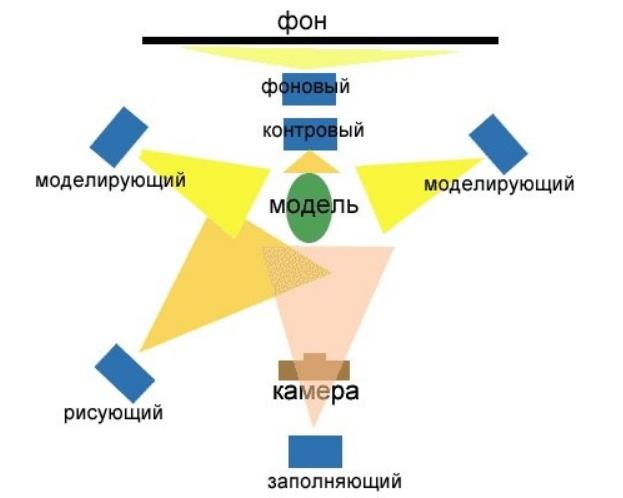
It is not necessary to use all lighting options, it all depends on the situation and need. As practice shows, in most cases 2-3 elements are enough to provide the desired result.
Recommended for viewing: 5 types of light in photo and video shooting.
To understand the types of lighting, the photographer must control four important characteristics:
- General illumination the subject of photography and the space that falls into the frame. It is important to choose the optimal mode that will provide high-quality images and highlight all the important elements.
- Contrast. Another point that should not be overlooked. You can adjust by softer or vice versa, hard light. Do not be too zealous, excessive contrast will not benefit the picture.
- The presence of blackouts in the frame, size, and direction of shadows, if any. Due to the play of light and shadow, you can achieve different effects. The main thing is not to overdo it.
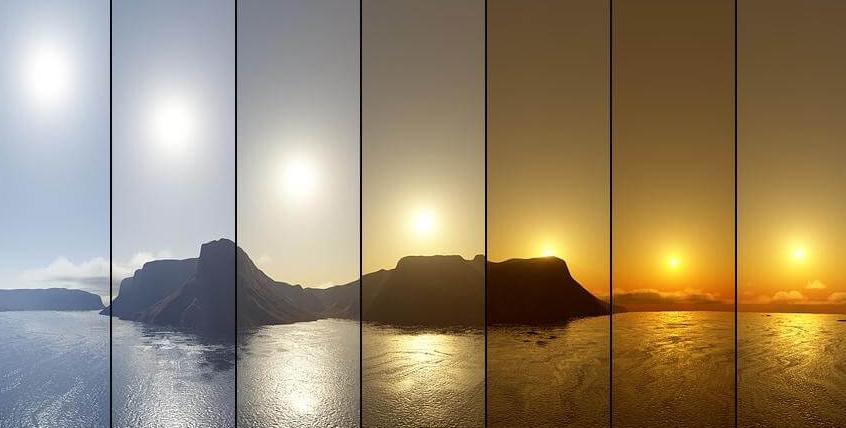
- Colorful temperature lighting. The standard setting is 5500K, which is roughly equivalent to daylight. But often the constant light becomes dimmer as the flash is used during the shooting.
Equipment and accessories for studio shooting
To provide good lighting and easily adjust it if necessary, it is worth using special equipment and auxiliary devices. With their help, you can create a convenient place for photographing in almost any room. The main options are:
- Constant light lamps. Most often they are installed on special racks so that you can adjust not only the height, but also the direction of the light flux. Depending on the lamp used, the lamp can get quite hot during prolonged operation, so it is advisable to place it away from objects that are afraid of high temperatures.
- studio flashes or flashing lights. They do not burn constantly, but only during photography. In this case, the lamps practically do not heat up. Often, the equipment also has constant lighting, it has a low brightness and allows you to improve the focus of photographic equipment, evaluate the illumination and choose the ratio of light and shadow. This option can be produced both in the form of a monoblock and in the form of two elements with a separate control module.
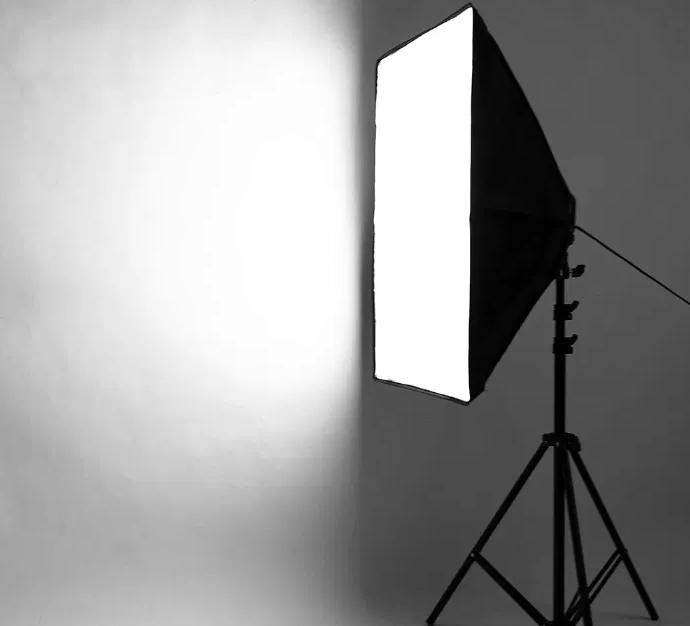
- softbox - a nozzle in the form of a square or rectangle. This is a frame made of metal rods, the back of which is covered with a black fabric, and the front is covered with a white diffusing material. Inside, the surface is finished with reflective material to improve light performance. This is the basic element used most often and suitable for different purposes.
![Schemes and varieties of studio light]() The softbox is one of the most popular lighting elements in studio photography.
The softbox is one of the most popular lighting elements in studio photography. - Octobox - an octagonal element, which, due to its shape, scatters light in different directions and can illuminate several objects at once. Creates soft lighting with an unobtrusive black and white pattern.
- stripbox has an elongated rectangular shape and is designed for shooting full-length portraits and other similar objects. Due to the high height, it evenly distributes light in a certain direction.
- Umbrellas. Traditional solution suitable for soft light distribution. There are two types, the first works through the light, is made of thin fabric and is needed to reduce the effect of pulsed light in order to fill the space with soft lighting. The second option is a dense reflective surface that effectively reflects light flow, but not suitable for a narrow beam.
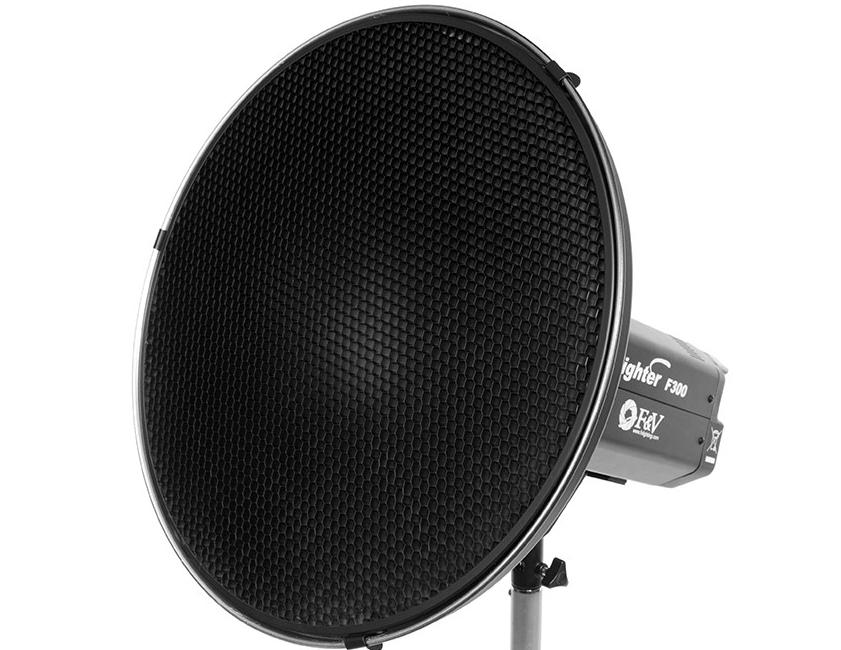
- beauty dish. Designed for creating stylish portraits with even soft lighting. Used by many famous photographers, easy and convenient to use. Due to the large size, the light distribution is ideal.
![Schemes and varieties of studio light]() Beauty dishes are often complemented with honeycombs for a clear distribution of light.
Beauty dishes are often complemented with honeycombs for a clear distribution of light. - Background reflectors designed to illuminate the rear. They allow you to remove shadows from lighting equipment and make the background uniform, without drops and highlights. If necessary, they can be used to create unusual background effects.
- tubes have a conical shape, due to which they can create a directed stream of light to highlight an individual object or part of a portrait. They are also used to create light spots on the background.. Often supplemented with honeycombs - a nozzle on the tube, which allows you to get clear parallel rays.
Read also: How to choose a ring lamp.
To change the color and intensity of the light flux, special filters are used. They can be installed on one or more light sources.
A video tutorial will help you understand the features of studio light sources.
How to set the light correctly - popular schemes
There are ready-made lighting schemes in the studio, using which it is easy to quickly achieve the right effect without wasting time choosing the location of the fixtures. You can sort through several to choose those that are most suitable for certain conditions.
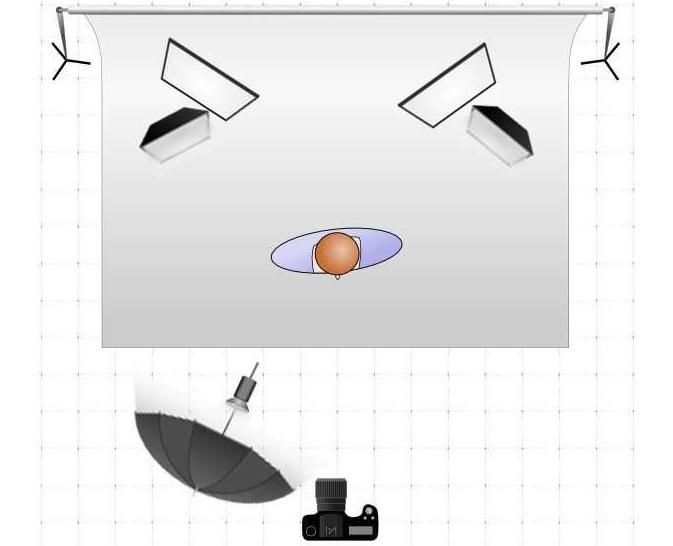
In this case, three lighting elements are required. The main one is located in front on the left and is placed at an angle of approximately 45 degrees. Moreover, the light is not directed to the subject, but is reflected from the umbrella, creating a diffuse light flux. A pair of stripboxes is placed at the back on both sides at an angle of 45 degrees. Perpendicular to them from the side of the background, two white backdrops are installed, which reflect the backlight and thereby add volume to the portrait or composition. As for the rear lighting, it can be changed by adjusting the height of the reflective umbrella.
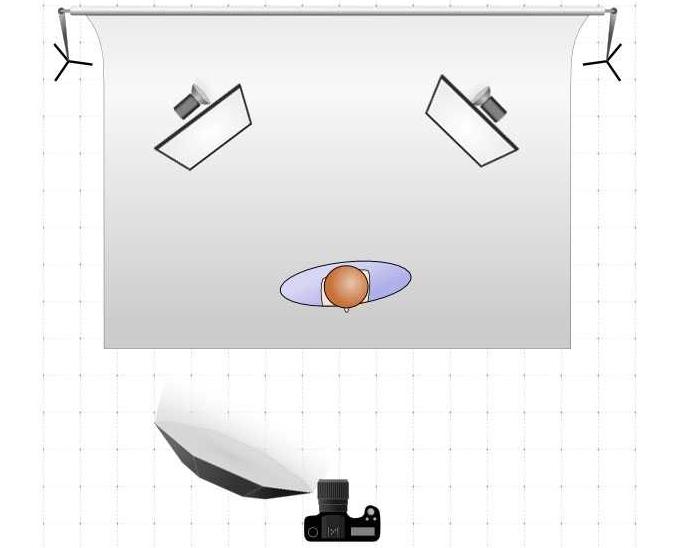
If the background needs to be light for optimal effect, two lights are aimed at it at an angle of 45 degrees. White screens are placed in front perpendicular to them to exclude the light of the subject. As a frontal light, a reflective umbrella is used, which is placed in front on the left. This scheme allows you to highlight everything to the smallest detail and provides high contrast ratios.
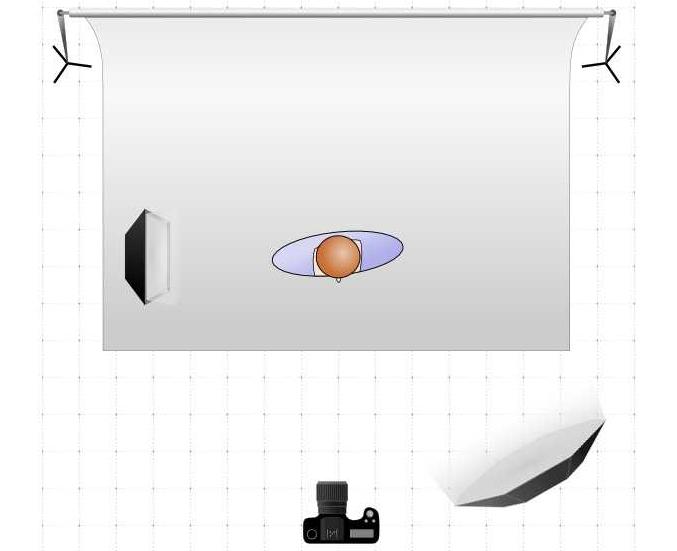
Very simple circuit used to capture a person in full growth. An octobox 180 cm high and 30 cm wide is best suited here. You can put it on either side of the person, or try both options and choose the more successful one. Due to the fact that the background is not highlighted, it turns out to be dark gray.
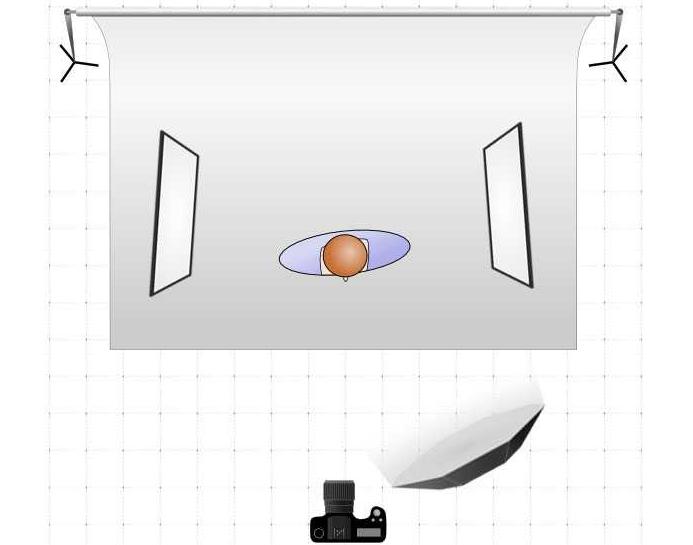
An option suitable for portrait photography, which also does not require a lot of lighting equipment. An octobox located on the right at a slight angle is best suited. Two large white panels are placed to the right and left of the shooting location, which will reflect the light and fill the entire space with it. A good solution for classic portrait photography.
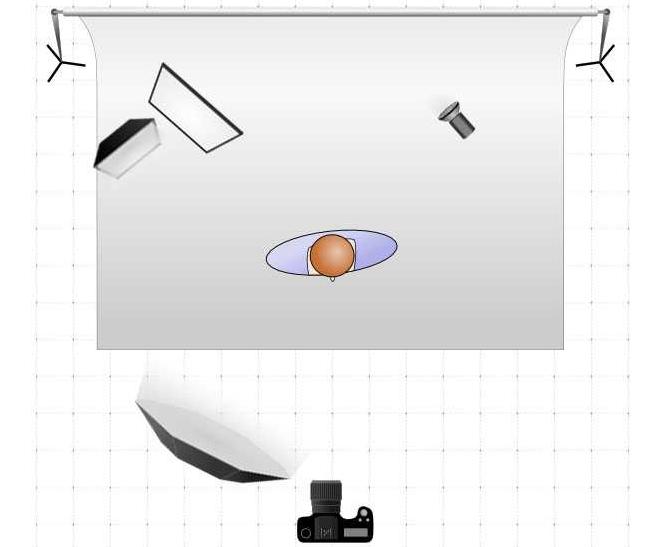
If you need to highlight the background, you can try this scheme. The back part is illuminated by a lamp, on which a reflector-honeycomb is put on. This allows you to create highlights that enliven the background, and if you use color filters, you can achieve unusual effects. The person is illuminated by a stripbox, which is placed at the back left at an angle of 45 degrees, behind it there is a screen so that the light does not spread to the background.
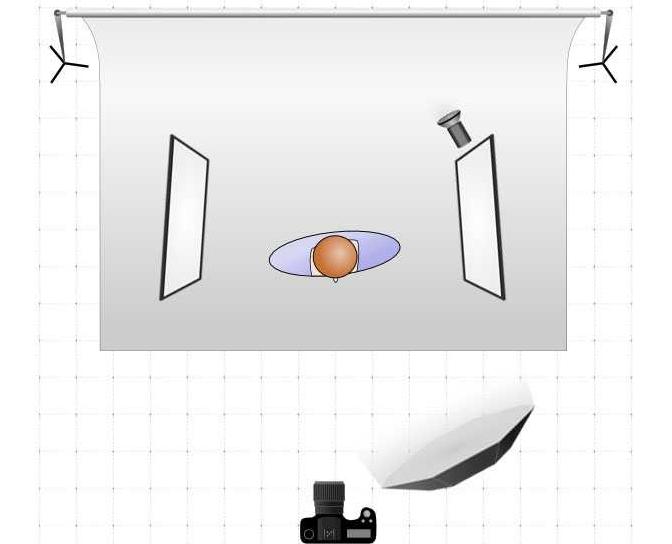
An interesting solution that creates an emphasis on a person due to reflected light. In this case, the softbox is placed back to the right and directed at the background at an angle. On the sides are two large white screens that gently diffuse the light and carefully work out all the details.
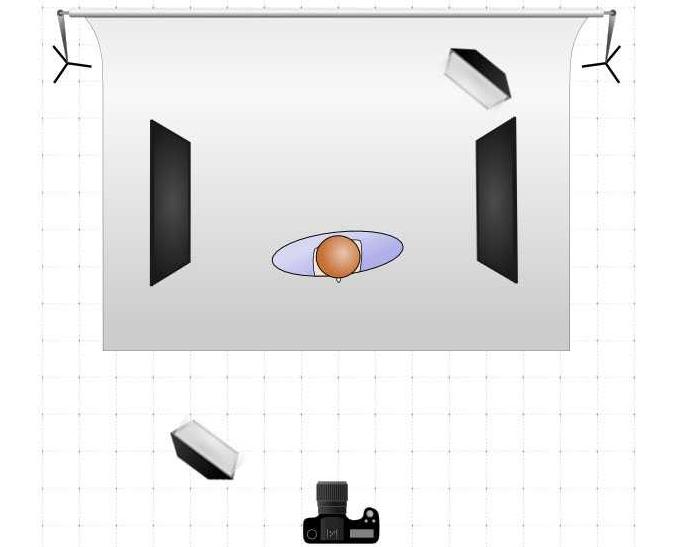
A height shooting circuit that provides uniform vertical illumination. You will need two growth stripboxes, the main one is located in front and on the left, the additional one is to the right in the back. To exclude excess reflected light, two dark-colored light-absorbing screens are placed on the sides.
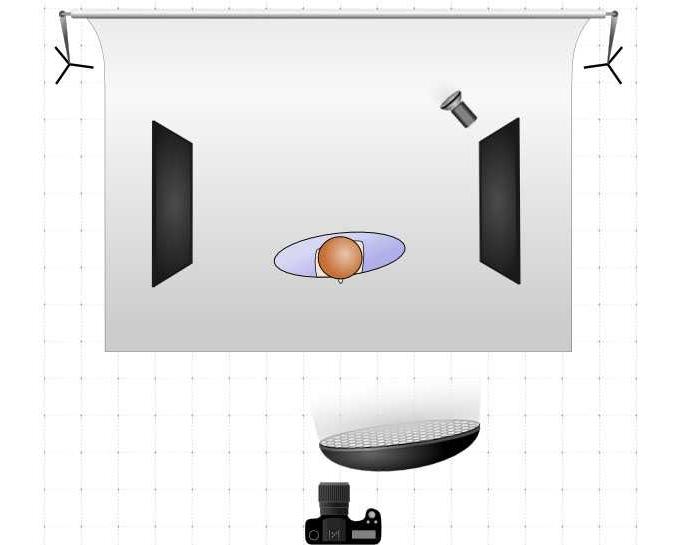
In this case, the main light is provided by a beauty dish, on which honeycombs are put on for directional light distribution. The background is illuminated by a low-power reflector, which is placed at an angle. Due to this arrangement of light sources, clear lines are created, you can change the overall atmosphere due to backlighting. Absorbing panels on the sides make the light harsher.
Helpful videos.
Choosing a studio light is not difficult if you understand the features of the equipment and find the optimal scheme for photography. The main thing is to provide high-quality main lighting and correctly position auxiliary elements.